Robinhood Buys WonderFi: What the Canadian Crypto Deal Means
Robinhood Just Bought Canada’s Biggest Regulated Crypto Brokerage
On May 20, 2026, Canada’s Investment Regulatory Organization (CIRO) approved Robinhood Markets’ all-cash, C$250 million (≈ US$179 million) acquisition of WonderFi Technologies. The deal closes on or about June 1.
WonderFi owns Bitbuy and Coinsquare – two of the largest CIRO-registered crypto exchanges in Canada, holding more than C$2.1 billion in customer assets between them and serving over 1.6 million registered users. For Robinhood, this is its first regulated international footprint built via M&A. For Canadian retail crypto, it is the largest consolidation event in years.

Quick Takeaways
- Robinhood Markets is acquiring WonderFi Technologies in an all-cash deal worth C$250 million (~US$179M).
- CIRO granted final regulatory approval on May 20, 2026; closing expected on or about June 1, 2026.
- WonderFi owns Bitbuy and Coinsquare — two of Canada’s largest CIRO-registered crypto exchanges.
- Combined customer assets under custody: over C$2.1 billion. Combined registered users: over 1.6 million.
- Original deal announcement: May 13, 2025. Shareholder approval: July 17, 2025. BC Supreme Court order: July 21, 2025.
- The structural takeaway: consolidation of regulated centralized exchanges is accelerating faster than new rule-making — the case for self-custody widens with every closed deal.
What This Deal Actually Is
Strip away the press releases and the deal is straightforward. Robinhood pays C$250 million in cash for a TSX-listed Canadian holding company that owns the two biggest regulated crypto exchanges in the country. The price values WonderFi at roughly US$112 per customer account when divided across the 1.6 million registered users at Bitbuy and Coinsquare – a modest figure compared with what comparable platforms have fetched in prior cycles.
The timeline matters. The deal was announced in May 2025. WonderFi shareholders approved it two months later in July, and the Supreme Court of British Columbia signed the final order four days after that. From announcement to court order took 69 days. The CIRO sign-off took an additional ten months, which is what you would expect from a Canadian financial regulator dealing with a foreign acquirer of a crypto business – careful, deliberate, and not interested in moving on the timeline of a press release.
That ten-month wait is the part of this story worth paying attention to. CIRO approval is not perfunctory. It signals that Canadian regulators are comfortable with Robinhood as a controlling owner of two registered crypto trading platforms. That comfort is the asset Robinhood is actually buying.
Why M&A Beats Greenfield in Regulated Crypto
Canadian crypto regulatory licenses are difficult and slow to obtain organically. After the 2022 collapse of FTX and the 2023 tightening that pushed Binance, ByBit, and other offshore venues out of the Canadian market, the remaining CIRO-registered platforms became scarce. A US-based firm trying to enter Canada from scratch would face a 24-to-36-month registration process and an open question of approval. Buying an already-registered entity collapses that timeline to a regulator review of the buyer.
This is the same logic that drove eToro’s $70M acquisition of ZenGo earlier this year. It is the logic that will drive the next several deals in the space. Regulated crypto licenses are scarce, and they are becoming more valuable than the underlying customer book in many cases. The Robinhood/WonderFi deal is a clean expression of that pattern.
What does it mean for Robinhood specifically? Vlad Tenev’s firm has been moving away from the US-only retail-broker identity for two years. Adding regulated Canadian crypto distribution is the next logical step after the Bitstamp acquisition in 2024 and the prediction-markets expansion in 2025. The destination is a multi-asset, multi-jurisdiction brokerage – not the original mobile-first US equities app that went public in 2021.
What This Means for You
Three practical reads, depending on where you sit.
If you have a Bitbuy or Coinsquare account. Expect a transition period. Robinhood will eventually consolidate the two brands or migrate them onto a unified Robinhood Crypto Canada platform. In the short term, your account, your assets, and your fees should be unchanged – CIRO would not have approved otherwise. Over 12 to 24 months, expect product changes, fee schedule updates, and possibly forced migrations. Read every transition notice carefully when it arrives, and make sure your two-factor authentication and identity verification are current well before the close date.
If you trade or hold crypto in the US. The signal is about Robinhood’s roadmap, not your account. The Canadian regulatory footprint gives Robinhood a template – and a balance sheet – to pursue similar moves elsewhere. Expect Robinhood Crypto in the US to expand its product mix faster than it would have without this deal. Whether that is good for the average user depends on what gets added: staking, futures, and tokenized assets are the most likely candidates.
If you watch crypto market structure. The interesting question is who consolidates next. The remaining CIRO-registered platforms, the smaller European venues with MiCA licenses, and the Singapore-licensed brokerages are all acquisition targets. The structural pattern – buy the license, inherit the customer book – will repeat in every regulated jurisdiction this cycle.
Disclosure: This article contains affiliate links. If you purchase a Trezor hardware wallet through the links below, Break The Ordinary earns a commission at no extra cost to you. We only recommend products we have independently evaluated as useful for the topic at hand.
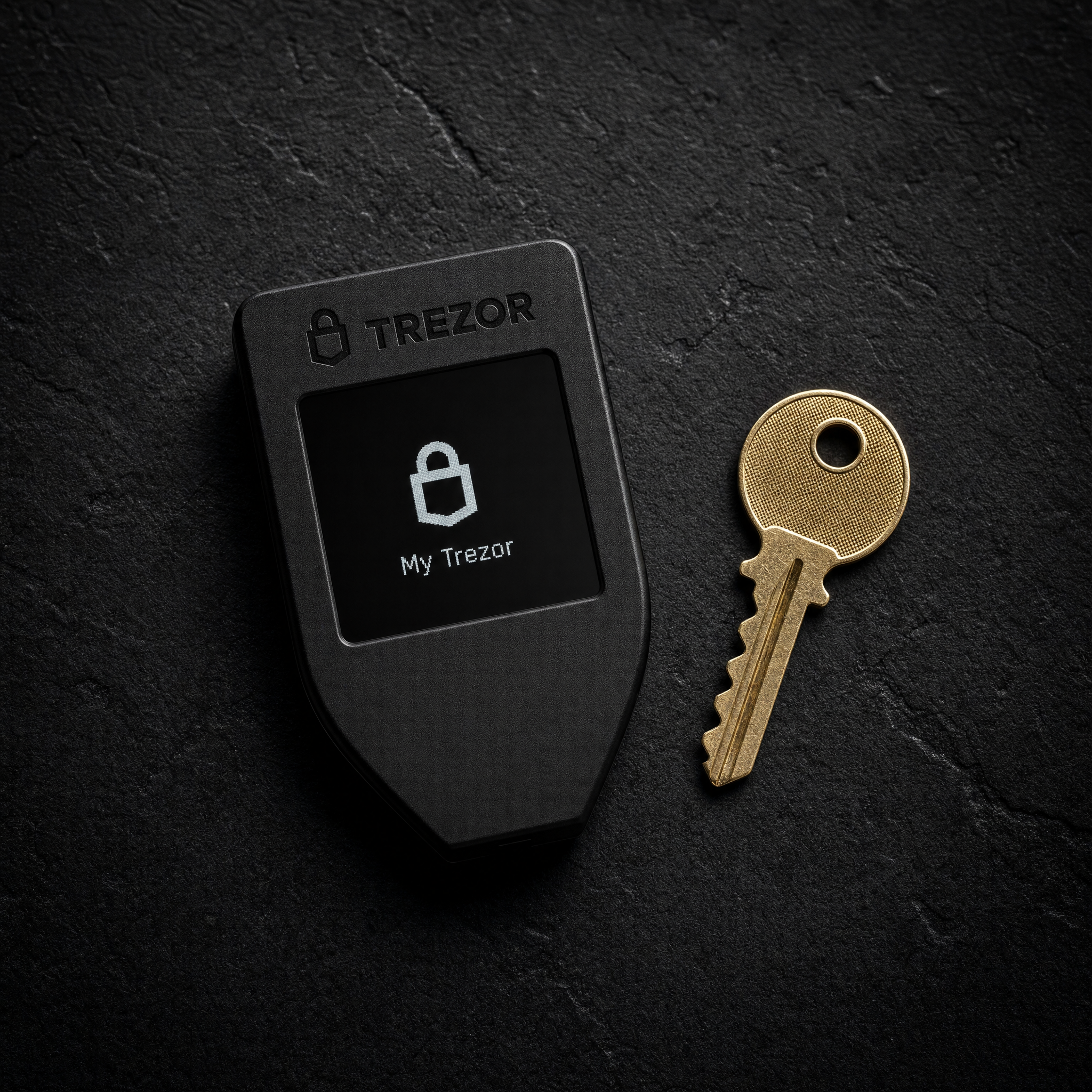
Consolidation widens the case for self-custody. When the regulated centralized brokerage you use today gets acquired tomorrow, the only crypto holdings that are unambiguously yours are the ones held in a wallet you control. A hardware wallet like the Trezor Safe 5 stores your private keys offline and signs transactions on the device itself, removing the brokerage as a counterparty entirely. For holders who want the same threat model at a lower price point, the Trezor Safe 3 covers the core security at a budget price. Both are built by SatoshiLabs, the team behind the original Trezor in 2013.
Frequently Asked Questions
What does the Robinhood–WonderFi deal cost?
Approximately C$250 million in an all-cash transaction, which is roughly US$179 million at recent exchange rates. The deal was announced May 13, 2025, and received final CIRO approval on May 20, 2026, with closing expected on or about June 1, 2026.
What is WonderFi?
WonderFi Technologies is a TSX-listed Canadian holding company that owns Bitbuy and Coinsquare — two of the largest CIRO-registered crypto trading platforms in Canada. The combined platforms hold over C$2.1 billion in customer assets and serve more than 1.6 million registered users.
Will Bitbuy and Coinsquare keep operating?
Yes, in the short term. CIRO would not have approved the acquisition if the operational continuity of either platform were in doubt. Over the following 12 to 24 months, expect Robinhood to consolidate the brands or migrate customers onto a unified Robinhood Crypto Canada platform. Customers should monitor transition notices closely.
Why did the deal take so long to close?
The slow part was Canadian regulatory review. The 10 months between BC Supreme Court approval (July 2025) and CIRO approval (May 2026) reflect the careful posture Canadian regulators have taken toward foreign acquirers of crypto businesses since the post-FTX tightening cycle. Approval is the asset being purchased — buying it through M&A is faster than building it through greenfield licensing.
What does this mean for self-custody?
The structural case for self-custody widens with every consolidation event. When the brokerages you use are themselves being acquired, the only crypto holdings that remain unambiguously yours are the ones held in a wallet you control. This article is for informational purposes only and is not financial advice.
How I Know This
I track regulated-crypto M&A in the same notebook I keep on Bitcoin treasury announcements and stablecoin attestations, because the structural moves are more useful than the daily price tape. The Robinhood–WonderFi deal is a clean instance of a pattern that has been playing out across regulated jurisdictions for two years: licenses are scarce, M&A is faster than greenfield, and the integration risk for users is real but boring.
I built Break The Ordinary because no one in BTO’s audience has time to follow this kind of story across six trade publications. The job is to extract the signal and tell you what you should actually do with it.
What You Should Take From This
Robinhood acquiring WonderFi is one data point in a larger pattern: regulated centralized crypto exchanges are consolidating faster than rule-makers can keep up, and the structural advantage of self-custody widens with every deal that closes. If you have a Bitbuy or Coinsquare account, read every transition notice carefully. If you trade crypto anywhere on a centralized platform, ask yourself the only question that matters in a consolidation cycle – are the coins you care about held somewhere you control?
That question has a yes/no answer. The cycle does not slow down for people who never get around to figuring out which one applies to them.
Build the rest of your foundation
Crypto is one allocation inside a broader portfolio. If the rest of yours is still under construction, start with how to build your first investment portfolio, then read why most people never build wealth — the patterns that hold someone back at 25 are the same ones that compound through the rest of their working life.