Published: June 4, 2026 · Last updated: June 4, 2026
SpaceX IPO 2026: What the $1.77 Trillion SPCX Debut Means for You
SpaceX has priced its IPO at $135 per share, valuing the company at roughly $1.77 trillion and raising about $75 billion. The SpaceX IPO 2026 is being reported as the largest in history, and the stock is expected to begin trading on the Nasdaq next week under the ticker SPCX. For the first time, ordinary investors are being invited into a launch most people only watched from the sidelines.
That invitation is the part worth slowing down for. A record valuation and a famous name make for a good story, but a story does not pay your returns. We saw the same pull with the Anthropic IPO, another headline name everyone suddenly wanted to own.
This article is for informational purposes only and does not constitute financial advice. Always consult a qualified financial advisor before making financial decisions.
What This Article Covers
- What SpaceX actually priced and when it trades
- Whether retail investors can buy SPCX at the IPO price
- What a $1.77 trillion valuation really implies
- Why chasing the first-day pop usually loses
- Mistakes to avoid with any hyped IPO
- One hyped name versus broad index exposure
- Frequently asked questions
The SpaceX IPO 2026 priced at $135 per share, a roughly $1.77 trillion valuation and a record ~$75 billion raise, with shares set to trade on the Nasdaq under the ticker SPCX. Retail investors can request IPO-price shares through brokers like Robinhood, Fidelity, and Schwab, but allocations are limited, so most buyers will only get in on the open market. A disciplined plan beats chasing one hyped stock.
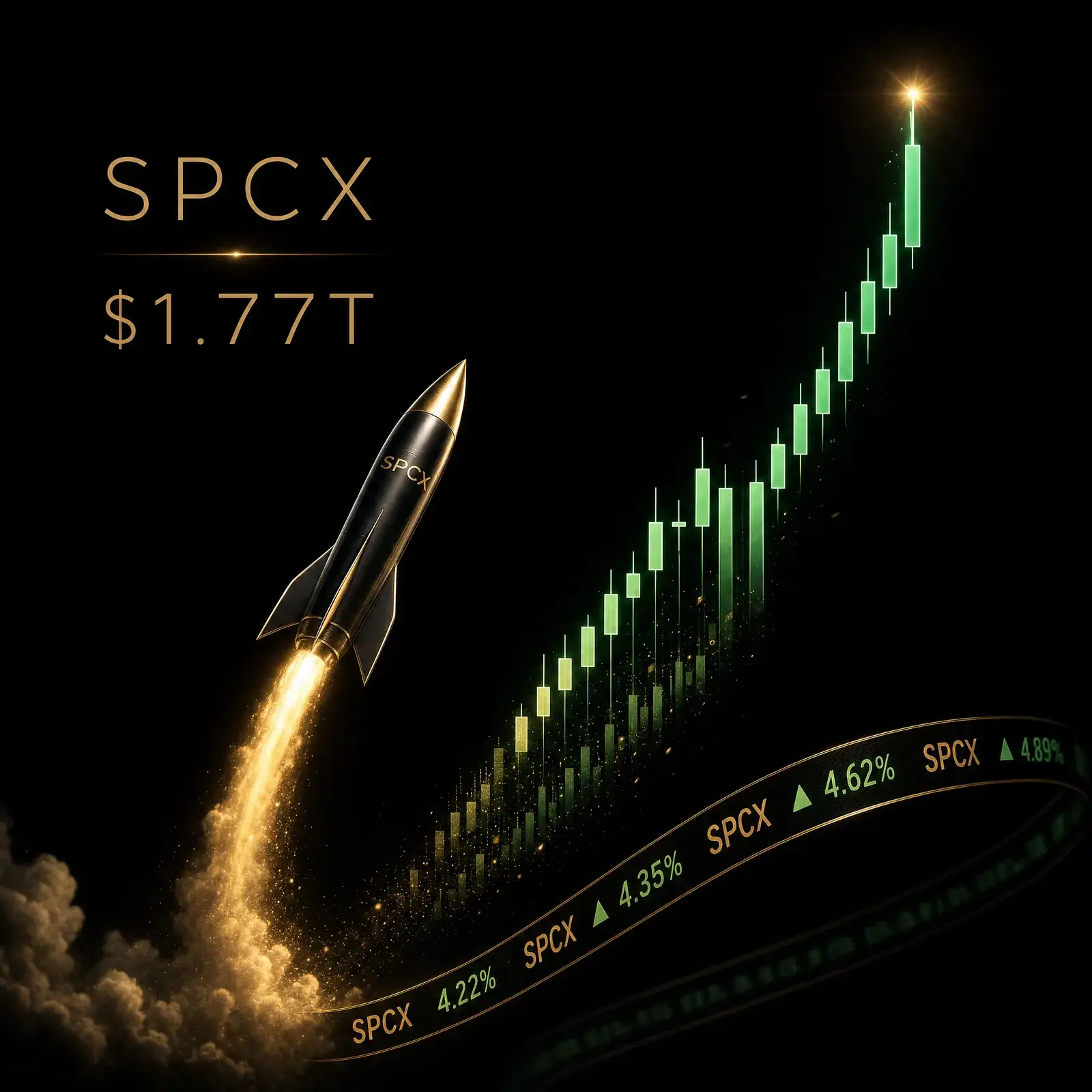
The short answer: SpaceX set a fixed price of $135 per share for about 555.6 million shares, valuing the company near $1.77 trillion and raising roughly $75 billion. Trading is expected to begin on the Nasdaq next week. The harder question is whether the price you pay leaves any room for you to come out ahead.
Quick Takeaways
- SpaceX priced its IPO at $135 per share.
- That values the company at roughly $1.77 trillion.
- The ~$75 billion raise is reported as the largest IPO ever.
- Shares are set to trade on the Nasdaq under ticker SPCX.
- About 30% of shares are reserved for retail investors.
- Demand is expected to far exceed the retail allocation.
What Did SpaceX Price, and When Does It Trade?
SpaceX set a fixed IPO price of $135 per share for roughly 555.6 million shares, which works out to a raise of about $75 billion and a valuation near $1.77 trillion. Reuters, CNBC, and Fortune all report it as the largest IPO on record, and the valuation would rank SpaceX among the very largest U.S. companies, above Tesla.
The timeline and the lead banks
The investor roadshow runs the week of June 8, with pricing expected June 11 and trading expected to begin on the Nasdaq on June 12 under the ticker SPCX. Goldman Sachs is the lead bookrunner, joined by Morgan Stanley, Bank of America, Citigroup, and JPMorgan Chase across a syndicate of roughly twenty-one banks.
According to the company’s S-1 filing, the proceeds are aimed at orbital AI data centers, a lunar manufacturing outpost, and the Mars program. Those are decade-long bets, not next-quarter earnings, which is exactly why the price you pay today matters so much.
Can Retail Investors Actually Buy SPCX?
Yes, with real limits. SpaceX is reserving about 30% of its shares for retail investors, roughly triple the usual 10%, available at the IPO price through brokers including Robinhood, Fidelity, Charles Schwab, SoFi, and E*TRADE, at the same time as institutions.
The catch most headlines skip
Access is not the same as allocation. Schwab requires a $100,000 minimum balance to participate, and CNBC reports that demand is expected to vastly exceed the retail tranche. Most people who request shares will get a partial fill or nothing, which means the open market on June 12 is the real entry point for the majority of retail buyers.
A record valuation and a famous name make for a great story. But the price you pay is the only part of the return you actually control.
Break The Ordinary
What Does a $1.77 Trillion Valuation Imply?
A $1.77 trillion price tag means a lot of future is already baked into the stock. To justify it, SpaceX has to deliver not just on Starlink and launches, but on speculative bets like orbital data centers and Mars. Morningstar reportedly pegged fair value at roughly half the IPO price, which tells you how much optimism is priced in.
Great company, separate question
Whether SpaceX is an extraordinary company is a separate question from whether SPCX is a good buy right now. A great business bought at a demanding price can still deliver poor returns for years. We unpack that gap between narrative and numbers in our financial literacy basics guide, and it applies to every hyped name, including the Anthropic and SpaceX compute deal investors keep citing as proof of the upside.
Why Chasing the First-Day Pop Usually Loses
The temptation with an IPO this big is to buy at the open and ride the excitement. The data is not kind to that instinct. First-day pops are often gifts to early institutional holders, and the buyers chasing the spike frequently pay the highest price of the year.
Discipline beats prediction
The reliable path is unglamorous: broad index exposure, regular contributions, and time. You give up the thrill of the single big winner, but you also stop betting your future on one company executing flawlessly at a record valuation.
Disclosure: the link below is an affiliate link. If you buy through it, Break The Ordinary may earn a commission at no extra cost to you. We only recommend products we would use ourselves.
If you want the evidence behind that ethos, A Random Walk Down Wall Street by Burton Malkiel makes the case plainly: picking individual winners consistently is far harder than owning the whole market. It is the book I hand anyone tempted to bet the farm on one ticker.
Mistakes to Avoid With Any Hyped IPO
The first mistake is confusing a great company with a great entry price. The second is sizing the position by enthusiasm instead of plan, putting money you cannot afford to lock up into a single volatile name.
The third is ignoring lockups and first-day volatility, then panic-selling when the early pop fades. None of these are about SpaceX specifically. They are the habits that quietly drain returns across every cycle of hype.
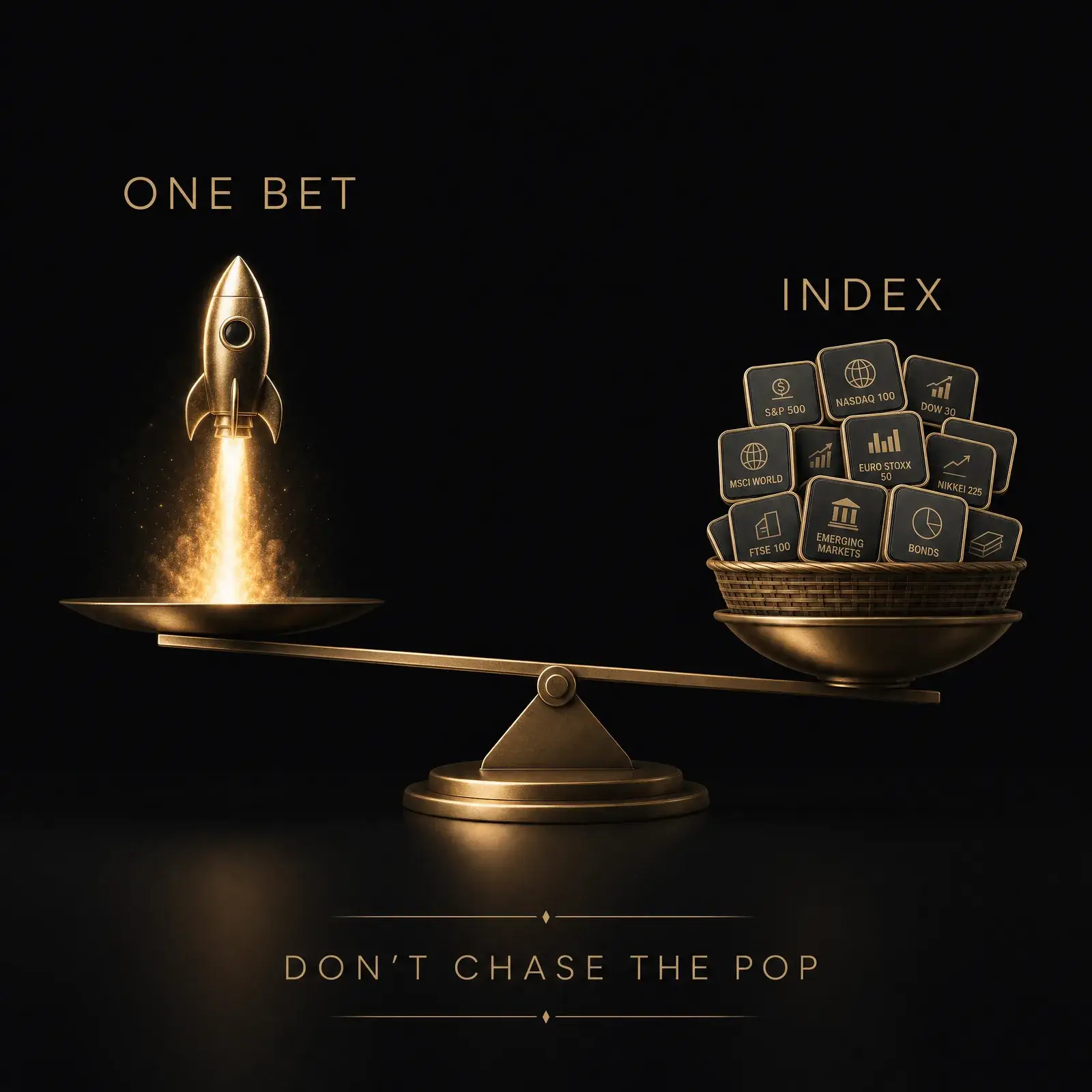
One Hyped Name Versus Broad Index Exposure
Chasing SPCX at the Open
- Outcome: Rides on one company executing perfectly
- Price: Often the highest of the year
- Volatility: Sharp swings, lockups, headline-driven
- Control: You control the entry, not the result
Broad Index Exposure
- Outcome: Captures many winners, survives losers
- Price: Averaged in over time, not chased
- Volatility: Diversified, smoother over years
- Control: You control contributions and time
Frequently Asked Questions
What did SpaceX price its IPO at?
SpaceX priced its IPO at $135 per share for roughly 555.6 million shares. That implies a valuation near $1.77 trillion and a raise of about $75 billion, reported as the largest IPO in history.
What is the SpaceX ticker and where will it trade?
SpaceX is expected to trade on the Nasdaq under the ticker SPCX, with trading set to begin the week of June 8, 2026, after pricing on June 11.
Can ordinary investors buy SPCX at the IPO price?
Some can. About 30% of shares are reserved for retail investors through brokers like Robinhood, Fidelity, and Schwab, but demand is expected to far exceed supply, so most people will only buy on the open market.
Is the SpaceX IPO a good investment?
We do not give buy or sell recommendations. SpaceX is an impressive company, but a roughly $1.77 trillion valuation prices in heavy optimism, so weigh the entry price and speak with a qualified advisor before deciding.
What is SpaceX using the IPO proceeds for?
The filing points proceeds at orbital AI data centers, a lunar manufacturing outpost, and the Mars program, alongside Starship development. These are long-horizon bets rather than near-term earnings drivers.
Should I buy SPCX on the first day of trading?
Chasing the first-day pop often means paying the highest price of the year. A disciplined approach favors a plan and broad exposure over reacting to a single launch-day spike.
How does SPCX compare to just buying an index fund?
One stock ties your outcome to a single company executing perfectly at a record price. A broad index spreads that risk across many companies and lets time and regular contributions do the work.
Why is the $1.77 trillion valuation controversial?
Analysts including Morningstar have suggested fair value sits well below the IPO price, because much of the valuation rests on speculative ventures that may take years, or never, to pay off.
How I Know This
I came to this country as an immigrant and built what I have from scratch, one disciplined decision at a time. I have watched plenty of can’t-miss names since, and the ones that hurt me were never the boring index contributions. They were the hyped tickers I chased because everyone else was.
So a launch like SPCX gets my respect as engineering and my caution as an investor. You can admire a company and still refuse to overpay for its stock, and that refusal is what builds independence. I would rather own a slice of everything steadily than bet my future on one perfect rocket.
The Bottom Line
The SpaceX IPO 2026 is a real milestone: a record ~$1.77 trillion valuation, a historic $75 billion raise, and rare direct access for retail investors through ticker SPCX. None of that tells you whether $135 is a good price to pay, and the price is the only part of the return you control.
That is the clarity Break The Ordinary exists to give you. Independence comes from a repeatable plan you stick with, not from the loudest headline of the month. For a grounded next step, our guide to building an investment portfolio shows how to put broad, disciplined exposure to work.
Randal is the founder of Break The Ordinary, where he documents what actually works for building independence. As an immigrant who built from scratch, he reads a debut like SPCX through the lens of someone who learned discipline the hard way. He writes from real experience, not hype.