Published June 1, 2026 · Last updated June 1, 2026
The $12.3M AI Trading Scam: How to Spot an AI Investment Scam Before It Takes Your Money
The latest AI trading scam did not need a single line of working code. On May 30, 2026, the SEC charged Texas resident Nathan Fuller with a $12.3 million Ponzi scheme through Privvy Investments, selling roughly 150 people access to “proprietary AI trading bots” that, per the complaint, never existed.
The pitch was simple and impossible: 40% to 50% returns in 30 to 45 days, sometimes more than 100% in 21 days, all “guaranteed.” The word “AI” did the heavy lifting. It is the word fraudsters now bolt onto a fake to make the math sound believable.
This is the BTO position you have read in financial literacy basics and why most people never build wealth. Real wealth comes from boring, verifiable systems, not guaranteed returns. The discipline that helps you build an investment portfolio protects you here, and the self-custody habit makes this fraud class impossible.
This article is for informational purposes only and does not constitute financial advice. Always consult a qualified financial advisor before making investment decisions.
AI trading scam (definition): An AI trading scam is investment fraud that uses artificial intelligence as a marketing hook, claiming a secret bot produces guaranteed high returns. It matters because “AI” makes impossible promises sound credible, which the SEC says is how a scheme like Privvy raised $12.3 million. It targets anyone drawn to fast crypto gains who has not learned the basic checks that expose fraud.
You spot an AI trading scam by treating any “guaranteed” or outsized short-term return as a lie, then verifying that the person and firm are registered, that an independent custodian holds the money, and that a real third party audits results. Privvy failed every one of those checks, and so does almost every AI investment scam.
Quick Takeaways
- SEC charged Nathan Fuller over a $12.3M AI trading scam via Privvy.
- Only about 3% of investor money ever touched real crypto.
- Roughly $6.2M went to personal spending; $5.5M to Ponzi payouts.
- “Guaranteed AI returns” is the single loudest red flag.
- Verify registration on IAPD and BrokerCheck before sending a dollar.
- Self-custody removes the middleman a crypto Ponzi scheme needs.
What actually happened with Privvy Investments?
The SEC alleges Fuller raised $12.3 million from about 150 investors across several states and countries between late 2022 and mid-2024. According to the complaint, he sold joint-venture interests on a story of AI-driven crypto arbitrage, with returns that were not just high but “guaranteed,” a phrase no honest operator uses.
The SEC says the AI bot was the whole product
The money tells the real story. The complaint says about $6.2 million went to Fuller personally and another $5.5 million to Ponzi-style payouts that faked the appearance of returns. Only around $380,000, roughly 3%, ever bought actual crypto. The “proprietary AI-based trading algorithms” were the entire product, and the SEC alleges they never existed. The details are in the SEC litigation release and CoinDesk’s report.
How does an AI investment scam actually work?
An AI investment scam works by manufacturing trust faster than you can verify it. The SEC alleges Fuller fabricated account statements and used AI to generate a fake auditor’s letter to back them up. According to the complaint, he also invented safety nets, falsely claiming a money-transmitter license, FDIC insurance, and a liability policy from a fake insurer he named “Texas Guarantors & Securities.”
The warning sign that was already on record
This was not a first offense hidden from view. About nine months earlier, a Texas bankruptcy court denied Fuller a discharge of more than $12.5 million in debt, after he admitted in those proceedings that he ran Privvy as a crypto Ponzi scheme. Any investor could have found that record.
“AI” is not a strategy. It is the word a crypto Ponzi scheme uses when it has nothing real to sell.
Break The OrdinaryWhat are the red flags of an AI trading scam?
The clearest red flag of an AI trading scam is a guarantee, because markets do not offer certainty and no algorithm changes that. The SEC, FINRA, and NASAA all flag pitches like “our proprietary AI trading system can’t lose” as textbook fraud language, almost word for word what Privvy sold.
The second red flag is “AI-washing,” where a buzzword gets bolted onto an unregistered platform to make impossible numbers feel technical. FINRA’s guide on AI and investment fraud shows how these pitches are built.
The pattern repeats across crypto fraud
You saw a version of this in our coverage of the Bitcoin Depot situation, where headline promises outran the business. The names change, but the structure holds: urgency, secrecy about how returns are made, and pressure to reinvest rather than withdraw.
What should I check before sending any money?
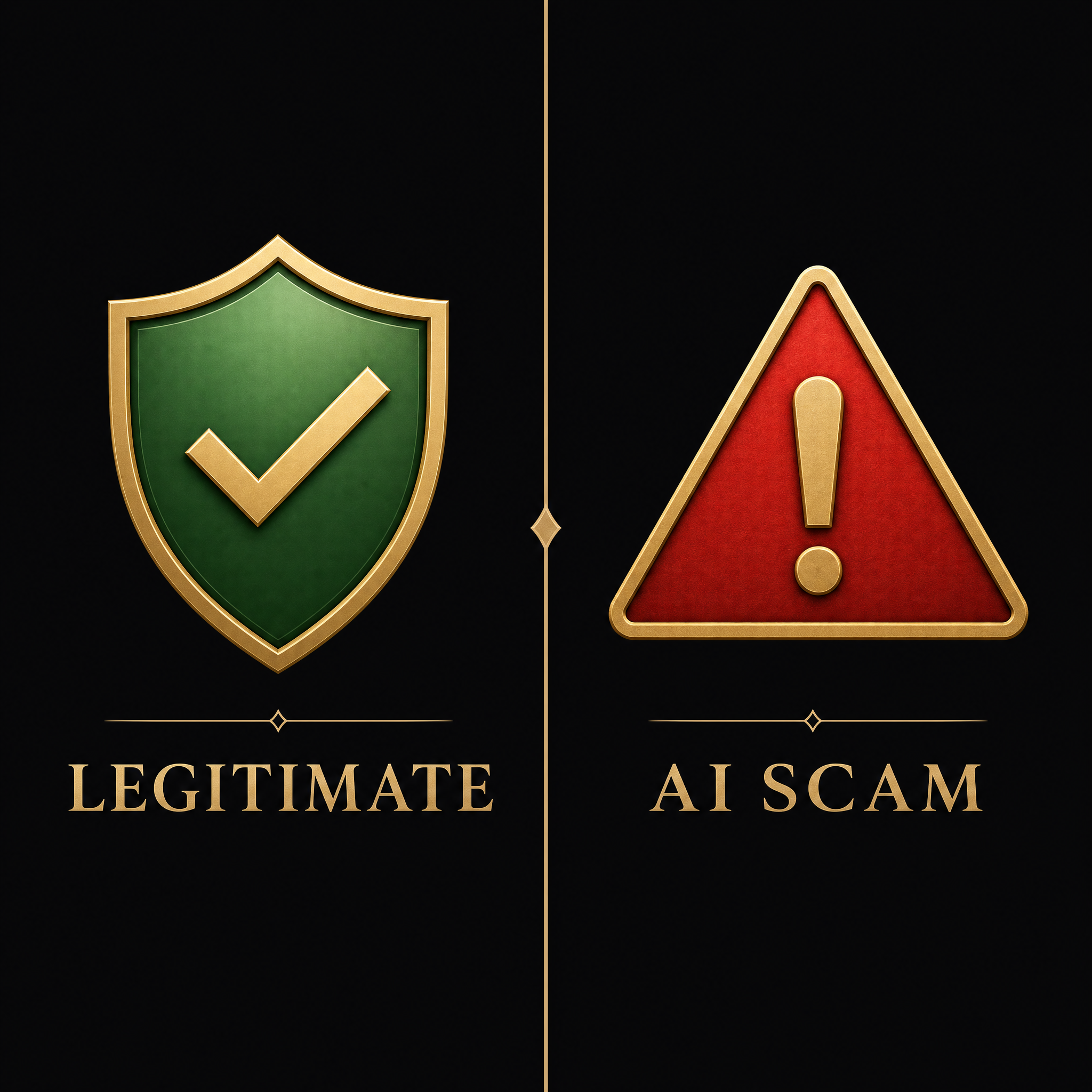
Before you send a dollar, verify three things and walk away if any one fails. This is how to spot investment fraud before it costs you, and it is faster than the sales pressure wants you to believe.
A Legitimate Operation
- Registration: The person and firm appear on IAPD or BrokerCheck.
- Custody: An independent qualified custodian holds the funds.
- Audits: A real, named third party verifies results.
- Returns: Honest about risk and never “guaranteed.”
An AI Trading Scam
- Registration: No record, or vague claims you cannot confirm.
- Custody: Money goes into one operator’s account.
- Audits: A letter that, the SEC alleges in Privvy’s case, AI wrote.
- Returns: “Guaranteed” 40% to 100% in weeks.
Verify the person and the firm first
Use the SEC’s Investment Adviser Public Disclosure search to confirm an adviser or firm is licensed and to see disciplinary history. FINRA’s BrokerCheck does the same for brokers. No registration is not a small detail, it is a reason to stop.
Mistakes that let scams like this work
The biggest mistake is trusting documents instead of verifying them. Statements, audit letters, and insurance claims can all be faked, and the SEC alleges that in this case they were. The next is letting fear of missing out beat basic checks, since a “guaranteed” 100% in three weeks is built to make you skip due diligence. Then there is handing your money to someone else’s account, which removes your control entirely.
Why self-custody ends this fraud class
Here is the structural point most coverage misses. A crypto Ponzi scheme only works because investors wire money into an account the operator controls. Remove that step and the fraud has nowhere to hide.
When you hold your own keys, no one can “trade for you” with funds you never surrendered. That is the lesson behind our self-custody guide: control of the asset is control of the risk. The same logic runs through the financial order of operations, where speculation comes last and only with money you can verify.
Disclosure: the links below are affiliate links. If you buy through them, BTO may earn a commission at no extra cost to you. We only recommend tools we would use ourselves.
If you decide to hold crypto, a hardware wallet keeps the keys in your hands instead of an operator’s account. The Trezor Safe 5 is the model we point most people to, and the Trezor Safe 3 is a lower-cost entry point. Neither is a trading product. They are the opposite of what Privvy sold: you keep custody, and no bot ever touches your funds.
Frequently Asked Questions
What is an AI trading scam?
An AI trading scam is investment fraud that uses artificial intelligence as a selling point, claiming a secret bot earns guaranteed high returns. In the Privvy case, the SEC says the AI bots never existed.
How much did the Privvy AI trading scam raise?
The SEC alleges Privvy raised about $12.3 million from roughly 150 investors. Only around 3%, about $380,000, ever went toward actual crypto.
Who is Nathan Fuller?
Nathan Fuller is the Texas resident the SEC charged on May 30, 2026 over the Privvy scheme. He had already admitted in a prior bankruptcy proceeding that he ran Privvy as a Ponzi scheme.
How do I tell a real AI investment from an AI investment scam?
A real opportunity is registered, uses an independent custodian, and is audited by a named third party. An AI investment scam guarantees returns, controls your funds directly, and resists verification.
What is the biggest red flag of investment fraud?
A guarantee of high returns with little or no risk is the loudest red flag. Real markets carry risk, and no algorithm removes it.
What is AI-washing?
AI-washing is attaching AI buzzwords to a product to make it sound advanced and trustworthy. In fraud, it disguises an ordinary scam, and regulators warn fraudsters even use AI to fake audits and documents.
Does self-custody really prevent this kind of crypto Ponzi scheme?
It removes the mechanism the fraud needs. A crypto Ponzi scheme depends on you handing funds to an operator’s account, so if you hold your own keys, no one can “trade” money you never gave them.
What should I do if I think I am being targeted?
Stop sending money and verify every claim independently. Refuse to wire funds into a personal account, and report suspected fraud to the SEC.
How I Know This
I came to the United States with almost nothing and learned the value of money the slow way, on a minimum wage paycheck. When you have counted out rent in small bills, a bot “guaranteeing” you double your money in three weeks does not sound like opportunity. It sounds like the trap it is.
I have run real businesses, an açaí shop and a home decor brand, and real businesses do not promise certainty. I have never carried credit card debt because I treat my own money with suspicion before trusting anyone else with it, the exact instinct that protects you from an AI investment scam.
The BTO Bottom Line
Privvy is a warning, not an outlier. The “AI” wrapper is new, but the crypto Ponzi scheme underneath is as old as greed. Breaking the ordinary means building independence from verifiable systems and assets you control, never from someone else’s guarantee.
If you want the next step, learn the habit that makes this fraud impossible. Read our guide on self-custody and holding your own keys, then build your portfolio on ground you actually own.
Randal is the founder of Break The Ordinary, where he documents what actually works for building independence. Having started from a minimum wage paycheck as an immigrant and built businesses from scratch, he knows the difference between earning money slowly and being promised it instantly. He writes about the systems, mindset, and money decisions that turn slow progress into lasting freedom.