Bitcoin Iran Deal: Why Chasing a Geopolitical Pump Is a Trap
The Bitcoin Iran deal headline wrote itself in June 2026. Bitcoin spiked to a two-week high after President Trump declared the US–Iran agreement complete and said the Strait of Hormuz would reopen. The reflex read is simple: good news, Bitcoin pumps, buy the breakout.
That reflex is exactly how disciplined money separates itself from impatient money. What moved Bitcoin was not adoption or a protocol upgrade. It was a political headline and a wave of forced buying, and within four days most of the move was gone.
This article is for informational purposes only and does not constitute financial advice. Always consult a qualified financial advisor before making investment decisions.
What the Bitcoin Iran deal move was: a short-term spike driven by macro risk-on sentiment and roughly $150 million in forced short liquidations, not a crypto-native catalyst. It matters because it shows Bitcoin trading as a high-beta risk asset that reacts to geopolitics like equities do. For long-term accumulators, the lesson is to read the cause, not chase the candle.
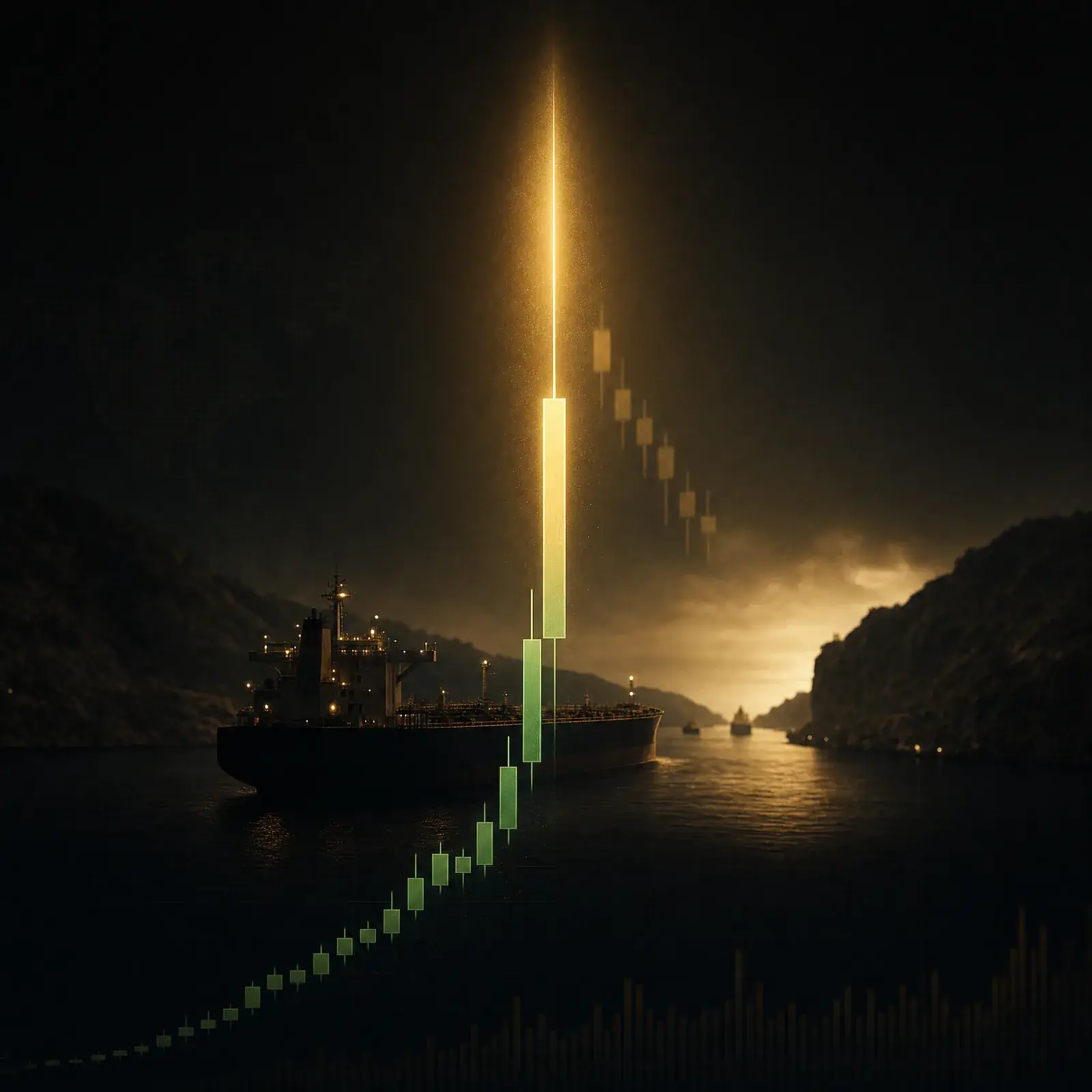
What actually happened with the Bitcoin Iran deal?
On June 14, 2026, Trump declared the US–Iran deal “officially complete” and said the Strait of Hormuz would reopen toll-free. The strait carries roughly one-fifth of the world’s daily oil supply, so its closure during the conflict had pumped a fear premium into energy and risk markets. The reopening let that premium drain out.
Markets moved as a block. Oil fell roughly 4%, the S&P 500 rose about 1.5%, and Treasury yields slipped as war-risk premia unwound, according to The Defiant. Bitcoin rode that same wave up to a two-week high.
The price, stated honestly
Reports of the peak vary, so here is the straight version. Most outlets put the spike in the mid-to-high $65,000s, with one reading as high as roughly $67,170, up about 4.9% over 24 hours. The agreement itself is a memorandum of understanding with a 60-day window, not a finished peace treaty, per CryptoBriefing.
Now the part the headlines skipped. By June 18, Bitcoin had slid back to about $63,980, giving up most of the pop after a hawkish Federal Reserve stance reset the mood. The geopolitical catalyst that lifted price had nothing to do with the catalyst that took it back.
Quick Takeaways
- Bitcoin spiked to a two-week high on the US–Iran deal news.
- The driver was macro risk-on sentiment, not a crypto catalyst.
- Roughly $150 million in short positions were liquidated.
- Oil fell about 4% as the Hormuz fear premium drained out.
- By June 18 Bitcoin gave back most of the move on Fed risk.
- Disciplined accumulators read the cause and avoid the chase.
Why did Bitcoin move on the Iran deal at all?
Bitcoin moved because it behaved like a high-beta risk asset, not like digital gold. When a fear premium leaves the system, the riskiest assets bounce hardest, and Bitcoin sits near the top of that list. The Bitcoin Iran deal reaction was a risk-on rotation, the same one that lifted stocks and sank oil.
The second engine was mechanical. Weeks of selling had emboldened short sellers, and the sudden reversal caught them on the wrong side. Around $150 million in shorts were force-closed, which means exchanges bought Bitcoin on their behalf to cover, according to Bitcoin.com News.
Short-covering is buying you cannot copy
Forced buying looks like demand on the chart, but it is not the same thing. A liquidation is a trader being closed out against their will, not a new buyer choosing to own Bitcoin for the next cycle. That kind of buying is finite and ends the moment the shorts are flushed.
A liquidation is forced buying, not conviction. It moves price up and then leaves the latecomers holding it.
Break The Ordinary
What does a liquidation-driven pump really tell you?
It tells you that price and fundamentals can detach for days at a time. Nothing about Bitcoin the network changed on June 14, 2026. What changed was a geopolitical headline and the positioning of leveraged traders, and that was enough to move the number by thousands of dollars.
It also tells you who gets hurt. The retail pattern is to see green, read the news, and buy near the top because it finally feels safe. Then the catalyst fades, the Fed says something hawkish, and the late buyer is underwater while the disciplined holder never moved.
The contrast with a real safe haven
If you want to understand Bitcoin’s character, compare it to assets that barely flinched. Money that wanted true safety during the conflict did not pile into Bitcoin, it sat in instruments like Treasury bonds. Bitcoin is an asymmetric long-term bet, not a place to hide during a war scare.

What should a disciplined accumulator actually do?
The short answer is almost nothing different. A long-term plan does not change because a political headline produced a two-day candle. The Bitcoin Iran deal spike is noise inside a multi-year thesis, and reacting to noise is how the thesis gets abandoned.
The longer answer has three moves: do not chase, do not panic, and secure what you hold. Each one is boring on purpose, because boring is what survives a Fed surprise three days later.
Do not chase the breakout
Buying a liquidation candle means buying the exact moment the temporary fuel is strongest. If you already accumulate Bitcoin on a schedule, keep the schedule. A fixed buy every week or month removes the headline from the decision entirely.
This is also why leverage is a trap during news spikes. The same forced-selling that powered this rally is what liquidates over-leveraged longs on the next reversal, a dynamic we broke down in our look at leveraged crypto products.
Do not panic on the way back down
The flip side of not chasing is not flinching. Bitcoin gave back most of the deal pop within four days, and that round trip is normal for a high-beta asset. A disciplined holder treats both the spike and the fade as weather, not as signals.
Secure what you hold
The one action genuinely worth taking has nothing to do with price. It is custody. Even Strategy, the largest corporate holder, made its first-ever Bitcoin sale in 2026 because of fixed obligations, a reminder we covered in what the Strategy sale really signals: control of your keys is control of your timing.
Disclosure: BTO may earn a commission if you buy through the links below, at no extra cost to you. We only point to gear we would actually use.
If your Bitcoin sits on an exchange, you are trusting someone else’s solvency and someone else’s security. A hardware wallet like the Trezor Safe 5 moves your keys offline and into your own hands. If you want the same self-custody at a lower entry point, the Trezor Safe 3 does the core job for less.
Chasing the pump vs. the disciplined play
Chasing the geopolitical pump
- Buys after the headline, near the high.
- Relies on forced short-covering that ends fast.
- Often uses leverage, amplifying the next reversal.
- Left underwater when the catalyst fades, as it did by June 18.
- Keeps coins on an exchange for “quick exits.”
The disciplined accumulator
- Buys on a fixed schedule, ignoring the headline.
- Treats spikes and fades as weather, not signals.
- Avoids leverage on news-driven moves entirely.
- Unmoved by the round trip because nothing structural changed.
- Holds keys in self-custody, controlling their own timing.
Bitcoin Iran deal: frequently asked questions
Did Bitcoin really hit $67,000 on the Iran deal?
Reports vary. Most outlets put the spike in the mid-to-high $65,000s, while one reading reached roughly $67,170, up about 4.9% in a day. Treat the peak as a range, not a single confirmed number.
Why did Bitcoin fall again so quickly?
By June 18, 2026, Bitcoin had slipped back to about $63,980. The pullback was tied to a hawkish Federal Reserve stance, not the Iran deal, showing how fast a macro mood can reverse.
What does the short liquidation figure mean?
Roughly $150 million in short positions were force-closed as price rose. That is forced buying to cover bets, not new long-term demand, which is why it fades quickly.
Is Bitcoin a safe haven during war?
The Iran deal move suggests not. Bitcoin acted as a high-beta risk asset that rallied when fear left the system, behaving more like equities than like a traditional safe haven.
Should I buy the breakout?
This is not advice, but chasing a liquidation-driven candle means buying when the temporary fuel is strongest. A fixed accumulation schedule removes the headline from the decision.
What is the one useful action here?
Securing your coins in self-custody. Price reactions to news are noise, but control of your own keys is a durable upgrade you control entirely.
How I know this
I came to this country with almost nothing and learned money the slow way, by saving from a minimum-wage paycheck and refusing to carry credit card debt even when it was tight. That experience taught me the difference between a real decision and an emotional reaction. Chasing a green candle is the second one wearing the costume of the first.
Building Break The Ordinary the same way, I treat my own crypto accumulation as a process, not a series of news bets. I do not have a finance pedigree, I have the discipline that comes from starting at zero and protecting every dollar I earned.
The point of all this
The Bitcoin Iran deal spike is a clean lesson in disguise. It looks like good news lifting Bitcoin, and it is really a story about how one headline plus forced buying can detach price from substance for a few days. Reading that correctly is worth more than catching the move.
Independence is built by the boring decisions you repeat, not the exciting ones you chase. If you want the next layer, our guide on building your first investment portfolio shows how a calm, automated process beats reacting to every headline.
This article is educational and not financial advice. Do your own research before making any investment decision.
Randal is the founder of Break The Ordinary, where he documents what actually builds financial independence. He approaches Bitcoin the way he approaches every money decision, as a disciplined process rather than a reaction to the day’s headlines. He writes for people who want to own their choices instead of chasing the crowd.