Published: May 18, 2026 | Last Updated: May 18, 2026
Disclaimer: This article is for informational purposes only and does not constitute financial advice. Always consult a qualified financial advisor before making investment or financial decisions.
ChatGPT Personal Finance: What It Actually Means When AI Reads Your Bank Account
ChatGPT personal finance tools went live on May 15, 2026. If you haven’t paid attention to what you’re actually handing over, this article is worth two minutes of your time. OpenAI connected ChatGPT to Plaid, the same infrastructure behind most of the budgeting apps you’ve already used, giving it read access to your balances, transactions, subscriptions, and investment portfolio.
For someone building their financial life from scratch, this could be the most useful money tool in years. It could also be a privacy trade-off you’ve never seriously thought about.
Before deciding whether to connect your accounts, it helps to understand what you’re granting access to, how it compares to what’s already out there, and where the real risks sit. If you’re working toward building your first investment portfolio, the difference between generic financial advice and advice based on your actual numbers matters more than most people realize.
This article connects to the broader foundation in financial literacy as a starting point and the discipline side of money explored in why most people never build wealth. If debt is your current priority, how to get out of debt fast is worth reading alongside this one.
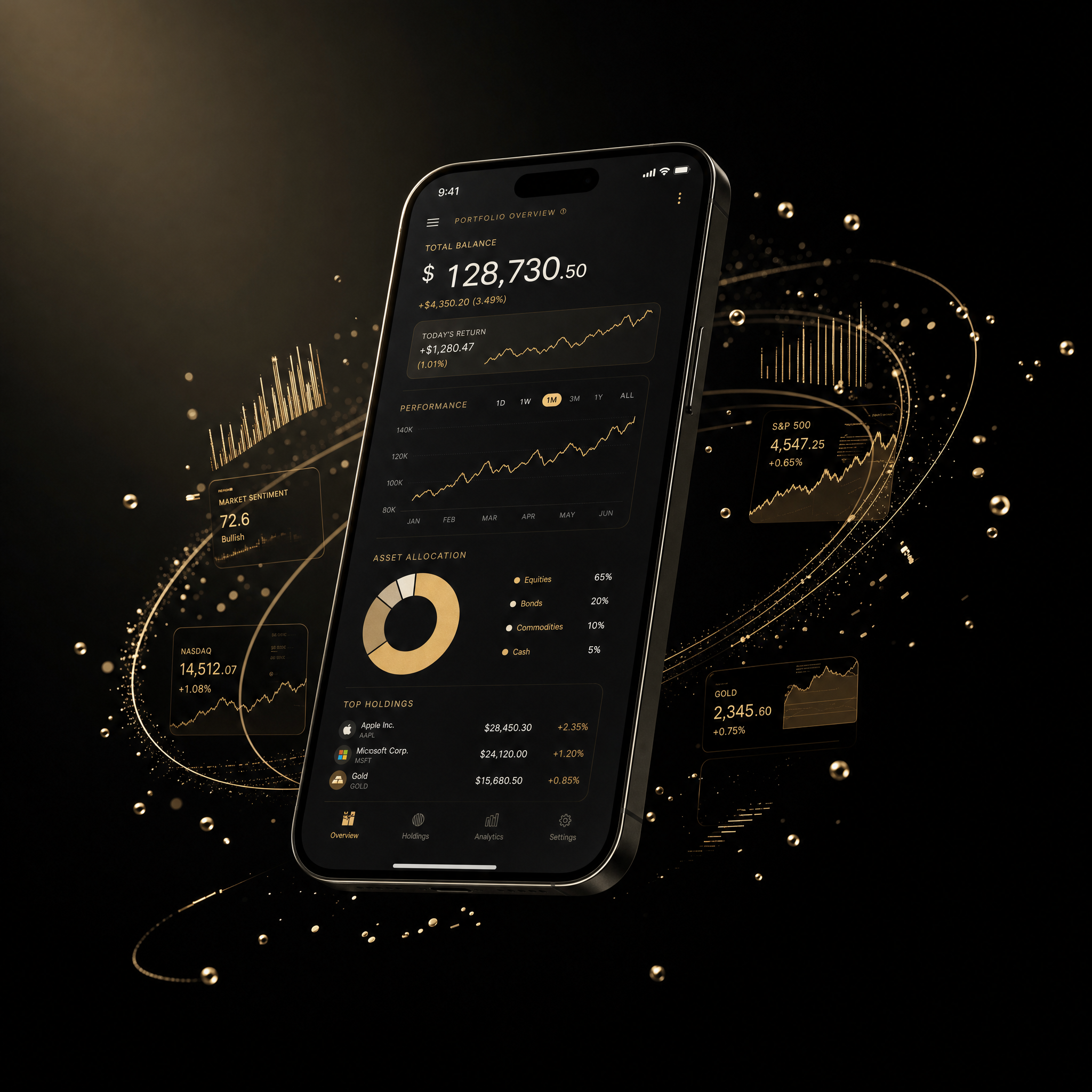
ChatGPT personal finance is OpenAI’s new feature that connects your bank, investment, and credit accounts to ChatGPT through Plaid, allowing the AI to give you advice based on your actual financial data rather than generic rules of thumb. It matters because the gap between “pay off high-interest debt first” and “pay down your Citi card before your Chase card” is the difference between advice you can use today and advice you’ve already heard a hundred times. It’s designed for people who want specific, data-driven guidance on their money without switching to a new app or paying for a separate subscription.
Quick answer: ChatGPT personal finance launched May 15, 2026 for U.S. Pro subscribers. Per OpenAI’s announcement, it connects to 12,000+ financial institutions via Plaid, giving you balances, spending, subscriptions, and portfolio performance inside a conversation; it cannot move money or view full account numbers. The privacy question of what OpenAI does with your financial data internally remains incompletely answered.
Quick Takeaways
- Available now for ChatGPT Pro users in the U.S. only.
- Connects to 12,000+ institutions via Plaid (per OpenAI’s announcement), including Chase, Fidelity, and Robinhood.
- ChatGPT reads your data; it cannot move money or see full account numbers.
- Data is removed within 30 days of disconnecting your accounts.
- OpenAI acquired personal finance startup Hiro in April 2026 to build this.
- The commercial use of your financial data by OpenAI is not fully disclosed.
How the Integration Actually Works
The setup is deliberately simple. In ChatGPT on web or iOS, select “Finances” from the sidebar or type “@Finances, connect my accounts” directly in a conversation. ChatGPT routes you through Plaid’s standard account-linking flow, the same one you’ve seen in apps like Venmo and Robinhood.
From there, it reads your connected data and displays a financial dashboard inside the chat interface.
That dashboard includes account balances, a spending breakdown, detected subscriptions, upcoming payment obligations, and portfolio performance if you’ve connected investment accounts. As of May 2026, the feature is in preview for Pro subscribers, with Plus access planned after OpenAI refines it based on early feedback. Future plans include Intuit integration, which would let ChatGPT cross-reference your finances with tax data to model the impact of selling a stock position.
Why OpenAI Built This Now
This didn’t appear overnight. In April 2026, OpenAI acquired personal finance startup Hiro, an acqui-hire that brought in a team led by Ethan Bloch, who previously founded and sold neobank Digit to Oportun for over $200 million in 2021. Hiro had managed over $1 billion in client assets before its app shut down on April 20, 2026. The acquisition brought specialist talent, not just the product.
The strategic logic is clear. Financial data is one of the most context-rich datasets an AI can access. Knowing your income pattern, your debt load, and your spending behavior gives a language model far more to work with than any prompt you could type manually.
The move also positions ChatGPT directly against specialized finance apps and the AI-native banking tools that are still being built.
What ChatGPT Personal Finance Can and Cannot Do
This distinction matters. There are real capabilities here, and there are hard limits. Conflating the two in either direction leads to either underusing the tool or trusting it with something it was never designed to handle.
What It Can Do
ChatGPT can read your balances across checking, savings, investment, and credit accounts. It can identify spending patterns, flag subscriptions you may have forgotten, and give you specific advice based on what it actually sees.
For example: “Based on your current Citi balance at 24.9% APR versus your Chase balance at 18.7% APR, targeting Citi first saves you more in interest over the next six months.” That kind of output requires your real numbers, which generic finance apps and generic prompting cannot produce.
It can also help you think through financial scenarios conversationally. That means actual Q&A about your situation, not just dashboards. The conversational layer on top of structured data is something none of the dedicated budgeting apps currently offer, and that gap is real.
What It Cannot Do
ChatGPT cannot transfer money, make payments, place trades, or change anything in your accounts. It cannot see your full account numbers. Those constraints are real and enforced through the Plaid integration itself, not just a policy statement.
OpenAI is also explicit that this tool is not a replacement for professional financial advice. For tax planning, estate planning, or complex investment decisions, a licensed advisor is still the right call.
How ChatGPT Compares to Existing Personal Finance Tools
Before deciding whether to connect your accounts, it’s worth knowing what was already available. The personal finance app market has been building toward AI-assisted money management for years. ChatGPT is not entering an empty field.
ChatGPT Personal Finance
- Cost: Included with ChatGPT Pro ($20/mo)
- Platform: Web + iOS (U.S. Pro subscribers only, as of May 2026)
- AI Approach: Conversational Q&A on top of your live financial data
- Best For: People who already use ChatGPT and want data-specific advice
- Key Limit: Privacy policy around financial data not fully disclosed
Monarch Money
- Cost: $9.99/mo or $99/yr
- Platform: All platforms; strong for couples and households
- AI Approach: AI assistant trained by financial professionals; investment + equity tracking
- Best For: Couples, complex households, investment portfolio visibility
- Key Limit: Separate subscription; no conversational depth of a general LLM
Copilot
- Cost: $13/mo or $95/yr
- Platform: Apple ecosystem only (iOS + Mac)
- AI Approach: Auto-categorization; real-time cash flow alerts; adaptive budgeting
- Best For: Apple users who want clean UX and automated expense tracking
- Key Limit: No Android or Windows support; separate subscription required
YNAB
- Cost: $14.99/mo or $99/yr
- Platform: All platforms
- AI Approach: No AI; manual zero-based budgeting
- Best For: Breaking paycheck-to-paycheck cycles; building intentional spending habits
- Key Limit: High learning curve; requires active engagement to work
The honest comparison: ChatGPT personal finance is not trying to replace Monarch or Copilot as a dedicated budgeting platform. It’s betting that the conversational interface, combined with the fact that most people already pay for Pro, makes it the path of least resistance. For someone building financial discipline from the ground up, YNAB’s manual approach still produces better habits.
For someone who wants data-backed answers to specific questions, ChatGPT’s new layer is genuinely useful. Those are different use cases, and which one applies to you determines whether this feature is worth turning on.
The Privacy Trade-Off You Need to Understand
This is the section most coverage glosses over. Your transaction history is not just a list of purchases. It contains signals about your income, your debt load, your lifestyle habits, your health spending, and your financial vulnerabilities.
That is an extraordinarily valuable dataset. It’s worth being precise about what you know and don’t know before connecting your accounts.
What Is Clear
The Plaid connection is the same infrastructure behind most of the apps you already use. ChatGPT cannot view full account numbers or initiate any transactions. If you disconnect, OpenAI says the synced data is removed from its systems within 30 days.
What Is Not Clear
OpenAI has not publicly detailed whether financial data is excluded from AI model training, how it is protected from internal commercial use, or what happens to derived inferences after you disconnect. “Derived inferences” means the behavioral and financial profile that could be built from your transaction patterns – and that profile doesn’t disappear just because you unlink your accounts. These gaps represent real data protection exposure the announcement does not resolve, and they matter whether or not you trust OpenAI’s intentions.
It’s also worth noting that Plaid itself settled a $58 million class action lawsuit in 2022 for collecting more financial data than users had consented to (CNBC, Jan 2022). That doesn’t disqualify Plaid as infrastructure, but it does mean trust in the pipeline should be calibrated, not assumed. OpenAI has faced ongoing litigation over user data practices, and that’s relevant context when evaluating how the company handles sensitive financial information.
A Practical Frame
If you’re using ChatGPT Pro and want specific answers about your debt repayment order or your subscription bleed, the tool is genuinely useful. The question is whether the specificity of advice you’ll get is worth sharing your full financial profile with a company whose data governance around that profile is not fully transparent. Make that call consciously, not by default, and not just because connecting is easy.
Mistakes to Avoid With ChatGPT Personal Finance
- Connecting all accounts before reading the privacy policy. The data removal policy (30 days after disconnect) is stated. What happens to your data while connected is less clear. Know what you’re agreeing to before you link.
- Treating ChatGPT’s output as professional financial advice. OpenAI is explicit: this is not a replacement for a licensed advisor. For tax planning, estate decisions, or complex investment moves, a professional is still required.
- Assuming the tool is available to you. As of May 2026, access is limited to ChatGPT Pro subscribers in the United States. Plus, Team, and international users are not yet supported.
- Skipping existing tools because ChatGPT is now available. If you already have a strong system in YNAB or Monarch, there’s no compelling reason to switch. ChatGPT personal finance adds the conversational layer; it doesn’t replace disciplined tracking.
- Using the tool passively. The feature produces better output when you ask specific questions: “Which card should I pay down first?” beats “help me with my finances.” The model needs direction to be useful.
FAQ
Is ChatGPT personal finance available to free users?
No. As of May 2026, the feature is only available to ChatGPT Pro subscribers in the United States. OpenAI has stated it plans to expand to Plus users after refining the product based on Pro user feedback.
Can ChatGPT move money or make transactions on my behalf?
No. ChatGPT cannot transfer money, make payments, place trades, or change anything in your accounts. It has read-only access through Plaid’s infrastructure. The connection is for data reading and analysis only.
What happens to my financial data if I disconnect?
OpenAI states that synced financial data is removed from its systems within 30 days of disconnecting. What happens to any derived inferences or behavioral profiles built during the connected period is not addressed in the announcement.
How does ChatGPT personal finance compare to Mint, which shut down?
Mint (Intuit’s free budgeting app) shut down in January 2024, with users redirected to Credit Karma. ChatGPT personal finance differs in that it’s conversational rather than dashboard-based, and it’s built on top of a general-purpose AI model rather than a dedicated finance tool. Future Intuit integration is planned, which may close that gap.
Is Plaid safe to connect?
Plaid is the standard infrastructure for fintech account linking in the U.S., powering thousands of apps. In 2022, Plaid settled a $58 million class action for collecting more data than users consented to, and has since updated its practices. The connection method itself is industry-standard; the question is what each company does with the data afterward.
Do I need a separate subscription for ChatGPT personal finance?
No. The feature is included in ChatGPT Pro at no additional cost. If you already pay $20 per month for Pro, access is included once you connect your accounts through the Finances option in the sidebar.
How I Know This
I don’t cover AI tools from the outside. I built an entire content operation on one. Break The Ordinary runs on a multi-agent AI pipeline with specialist subagents handling research, writing, SEO, design, backend validation, and social repurposing across a 7-phase production process.
I built it as a non-developer through structured prompting and process design. I manage every phase as the decision-maker and final reviewer.
That gives me a specific kind of clarity about what AI can and cannot do when you actually use it for real work, not in a demo or a press release. The gap between “AI can do X” and “AI reliably does X with your data in production” is where most of the interesting questions sit.
When OpenAI says ChatGPT will give you specific financial advice based on your numbers, I read that knowing how much prompt quality, data structure, and edge cases matter in practice. It’s a meaningful feature. It’s also worth understanding before connecting your bank account.
The Bottom Line
ChatGPT personal finance is not a gimmick. The shift from generic advice to advice grounded in your actual numbers is real. For someone actively working on debt payoff, subscription audits, or portfolio tracking, the conversational interface adds something the existing tools don’t have.
As of May 2026, the tool is early-stage, U.S. Pro-only, and comes with privacy questions that deserve a direct answer from OpenAI before they’re dismissed.
The smarter move is not to refuse the tool or adopt it without thinking. Understand what access you’re granting, ask the specific questions it’s built to answer, and treat the output as one input into your financial decisions, not the final word. That’s the standard you should apply to any financial tool, AI or otherwise.
Money is one of the few areas where vague thinking has precise consequences. The tools are getting better. The discipline to use them well still starts with you.
If you’re building your financial foundation and want to understand the full picture before adding tools like this, start with the financial literacy basics that most people skip. It’s the groundwork that makes everything else more useful.
Randal | Break The Ordinary
I’m Randal, the founder of Break The Ordinary, a multi-niche media brand covering business, tech, health, and finance for people who want to build wealth, freedom, and a life worth living. I built a fully automated AI content pipeline from scratch and use it daily, which gives me a ground-level view of what these tools actually do versus what they promise.
I share what actually works, what doesn’t, and what most people get wrong. My approach is direct, research-backed, and built on real experience, not theory.