
Last Updated: April 15, 2026 | By Randal | Break The Ordinary
How to Find Meaning in Uncertain Times
Finding meaning in uncertain times is the practice of deliberately building purpose through action rather than waiting for stability to arrive. It matters because people with a clear sense of direction handle disruption better, make sharper decisions, and recover faster than those who drift. It is most useful for ambitious people navigating career uncertainty, economic upheaval, or the psychological weight of rapid technological change.
Finding meaning in uncertain times means choosing a framework and acting inside it – not waiting for the right moment to start. The people who navigate disruption well do not have more clarity than everyone else. They have better frameworks. Viktor Frankl, Stoic philosophy, and modern psychology all point to the same conclusion: meaning is made, not found.
Quick Takeaways
- Meaning is built through daily action – not discovered through thinking.
- AI replaces tasks. It cannot replace human purpose or judgment.
- Responsibility is the fastest path to personal direction.
- Community and contribution consistently outperform isolation.
- Stoic discipline – focus on what you control – cuts through modern chaos.
- Financial literacy keeps your options open while you build your purpose.
Break The Ordinary covers the full intersection of business, technology, health, and finance – all four areas where finding meaning in uncertain times has real, practical stakes. As the content library grows, you will find deeper reads on each of those pillars. For now, subscribe to the newsletter to get new frameworks and practical breakdowns every week.
Table of Contents
- What Does Finding Meaning in Uncertain Times Actually Mean?
- Why Is Finding Meaning So Hard Right Now?
- What Can History's Greatest Thinkers Teach Us?
- How Do You Find Meaning When AI Is Changing Everything?
- What Are the Biggest Mistakes People Make?
- How Does Finding Meaning Help You Build Wealth?
- Why Does Community Matter More Than Ever?
- How Do You Start Finding Meaning Today?
- How I Know This
- The Break The Ordinary Perspective
- Frequently Asked Questions
What Does Finding Meaning in Uncertain Times Actually Mean?
Finding meaning in uncertain times is the process of aligning your daily actions with your deepest values and then doing the work to live that way – even when the external environment is unstable. It is not a feeling. It is a practice.
Most people think finding meaning is some grand revelation. A moment where the sky opens and your life purpose becomes clear. That is not how it works.
Viktor Frankl, the psychiatrist who survived Auschwitz and wrote Man's Search for Meaning, built his entire framework – called logotherapy – around a different idea. He said the primary drive of human life is not pleasure or power. It is meaning.
Viktor Frankl identified three paths to finding meaning. Creative values – the work you do and the things you build. Experiential values – the love, beauty, and connection you receive. Attitudinal values – the attitude you choose when facing suffering you cannot avoid.
That third path is the one that matters most right now. As of April 2026, there is no shortage of suffering and uncertainty to face. The question is whether you face it with intention or let it flatten you.
Why Is Finding Meaning So Hard Right Now?
Finding meaning in uncertain times is harder now because we are living through multiple disruptions simultaneously – economic, technological, and psychological – and each one amplifies the others.
Start with the economy. The United States launched the most aggressive tariff campaign since the mid-twentieth century. The average effective tariff rate hit its highest level since 1947.
The World Trade Organization warned that global merchandise trade could contract for the first time in years. Consumers are absorbing an estimated additional $1,500 per household in 2026 alone.
Companies cannot plan. Hiring has frozen in multiple sectors. The economic uncertainty alone is enough to destabilize anyone's sense of direction.
Then there is artificial intelligence. Goldman Sachs research shows AI is already erasing roughly 16,000 net jobs per month in the United States. The damage falls hardest on Gen Z and entry-level workers.
Software developer employment among 22-to-25-year-olds dropped 20% from its late-2022 peak. The World Economic Forum projects 92 million jobs displaced globally in the near term.
Anthropic CEO Dario Amodei warned in January 2026 that AI will cause "unusually painful" disruption. He said the technology operates as a general labor substitute – not just automating one task, but competing across the entire spectrum of cognitive work.
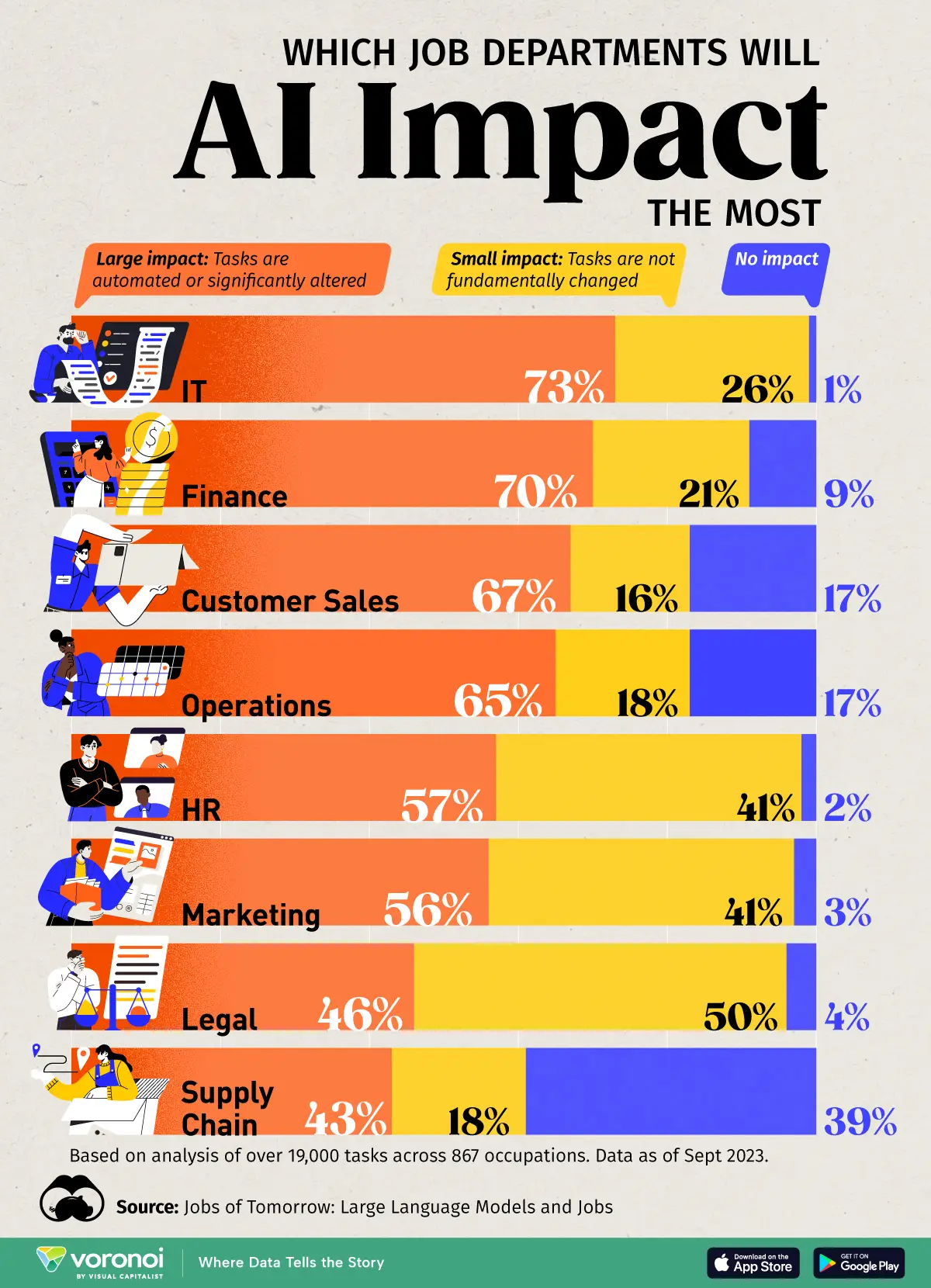
And all of this is crushing people mentally. Around 23% of American adults are experiencing mental illness. Two-thirds of Americans report anxiety about current events.
Over 40% of high school students report persistent sadness or hopelessness. Economic chaos, technological upheaval, and a mental health crisis are colliding at the same time.
This is the water we swim in every single day. And this is exactly why finding meaning in uncertain times is not optional. It is survival.
What Can History's Greatest Thinkers Teach Us About Finding Meaning?
History's greatest thinkers teach us that the search for meaning is ancient – and the frameworks they built still work because human nature has not changed. Here are the five most relevant frameworks for finding meaning in uncertain times in 2026.
Viktor Frankl – Meaning as the Core of Survival
In 1942, Viktor Frankl was stripped of everything – his career, his family, his freedom – and thrown into Auschwitz. What he observed was a pattern. The prisoners who survived were not always the strongest or the smartest.
They were the ones who had something to live for. A child waiting for them. A book they needed to finish. A purpose that made the suffering bearable.
Viktor Frankl wrote that between stimulus and response, there is a space. In that space is our freedom to choose. In that choice lies our growth.
Apply that to today. The tariff news hits. The AI headline lands. The market drops. There is a space between that event and your response. What you do in that space defines everything about your future.
Marcus Aurelius – The Discipline of the Inner Citadel
Almost two thousand years before Viktor Frankl, a Roman Emperor sat in a military tent on the Danube frontier. Surrounded by plague, war, and political betrayal, Marcus Aurelius wrote private notes about how to keep his mind together.
His core principle was simple: you cannot control what happens to you. You can only control how you respond. The obstacle is not in your way – the obstacle is the way.
Marcus Aurelius ran the Roman Empire during one of its most turbulent periods using this philosophy as a daily operating system. When AI makes your skillset feel obsolete overnight, the Stoic answer is not to retreat. It is to get precise about what you can influence and relentless about working within that circle.
Jordan Peterson – Order From Chaos
Jordan Peterson's central argument maps directly onto what millions of people feel right now. His work draws on clinical psychology, mythology, and neuroscience to argue that human beings are wired to exist on the border between order and chaos.
Meaning is found precisely at that edge. Too much order and you stagnate. Too much chaos and you drown.
Jordan Peterson argues you do not find meaning by thinking about it. You find meaning by taking responsibility for something. Clean your room. Fix what is broken. Start with what is immediately in front of you and expand outward.
Alfred Adler – The Courage to Contribute
Alfred Adler, the lesser-known third giant of modern psychology alongside Freud and Jung, built his theory around the courage to live by your own values rather than the expectations of others.
Alfred Adler argued that most human suffering comes from social comparison and the desperate need for approval. His solution was not to become superior. It was to shift your focus from yourself to your contribution.
The person drowning in comparison – scrolling through highlight reels, paralyzed by the gap between where they are and where they think they should be – is not dealing with a success problem. They are dealing with a courage problem. In an economy where AI is reshaping what "valuable work" even means, Alfred Adler's focus on contribution over comparison is not just philosophy. It is survival strategy.
Carl Sagan – The Pale Blue Dot Perspective
In 1990, Carl Sagan convinced NASA to turn Voyager 1 around, 3.7 billion miles from Earth, and take one last photograph of home. The result was a tiny dot suspended in scattered sunlight.
Carl Sagan's lesson was not nihilism. It was the opposite. Everything matters because this is all we have.
In April 2026, the Artemis II crew gave us an updated version of that perspective. Astronauts Reid Wiseman, Victor Glover, Christina Koch, and Jeremy Hansen flew within 4,067 miles of the lunar surface – the farthest any humans have traveled from Earth. Victor Glover looked back at our planet and said Earth looks like one thing from up there. That we are all one people.

Viktor Frankl – Logotherapy
- Core Idea: Meaning is the primary drive of human life – not pleasure or power
- Method: Find purpose through creation, experience, or chosen attitude toward suffering
- Best For: People facing career loss, economic disruption, or existential uncertainty
- Key Quote: "Between stimulus and response, there is a space."
- 2026 Application: Choosing your response to AI disruption and economic instability
Marcus Aurelius – Stoicism
- Core Idea: You cannot control external events – only your response to them
- Method: Daily discipline, journaling, rational self-examination
- Best For: People overwhelmed by news cycles, market volatility, and rapid change
- Key Quote: "The obstacle is the way."
- 2026 Application: Building mental resilience when disruption compounds on disruption
Jordan Peterson – Responsibility Framework
- Core Idea: Meaning comes from voluntarily shouldering responsibility – not from comfort
- Method: Start with what is broken in front of you and fix it. Expand outward.
- Best For: People stuck in analysis paralysis or feeling directionless
- Key Quote: "Clean your room."
- 2026 Application: Taking granular action when the macro picture feels uncontrollable
Alfred Adler – Contribution Psychology
- Core Idea: Shift focus from social comparison to meaningful contribution
- Method: Ask "how can I be useful?" instead of "how do I measure up?"
- Best For: People trapped in comparison loops and approval-seeking on social media
- Key Quote: "The courage to be disliked."
- 2026 Application: Breaking free from metrics and external validation in the content economy
Carl Sagan – Cosmic Perspective
- Core Idea: Everything matters precisely because this pale blue dot is all we have
- Method: Zoom out to see the full picture, then zoom in with urgency and intention
- Best For: People who have lost sight of what is worth fighting for
- Key Quote: "A mote of dust suspended in a sunbeam."
- 2026 Application: Using the Artemis II Earthset photograph as a reminder of shared stakes
How Do You Find Meaning When AI Is Changing Everything?
You find meaning when AI is changing everything by focusing on the one thing AI cannot replicate: the ability to choose your response to a completely novel situation and decide it is worth fighting for.
AI can process data faster than any human. AI can write code, generate images, and summarize research in seconds. But AI cannot choose to suffer for something worthwhile.
AI cannot decide that a broken world is worth repairing. AI cannot look at a picture of Earth from the Moon and feel the weight of what it means to be alive. You can.
What makes us irreplaceable is not raw intelligence. AI has already surpassed us in many cognitive domains. What makes us irreplaceable is the ability to look at a completely novel situation and deliberately choose how to respond.
To find meaning in suffering. To impose order on chaos. To build something that did not exist before, for reasons that only make sense to a human being who has lived and lost and kept going anyway.
The World Economic Forum projects that while AI will displace 92 million jobs, it will also create entirely new categories of work. The people who land those roles will not be the ones who memorized the old playbook.
They will be the ones who built adaptability, emotional intelligence, and a clear sense of purpose as their foundation. Self-improvement in the age of AI is not about competing with machines. It is about developing the qualities machines cannot have.
Judgment. Empathy. Vision. Leadership. The courage to make decisions without complete information. These are the skills that compound over decades – and that no language model can replicate.
What Are the Biggest Mistakes People Make When Searching for Meaning?
The biggest mistake people make when searching for meaning in uncertain times is waiting for it to arrive instead of building it through daily action. Here are the most common traps.
Mistake 1 – Treating Meaning Like a Destination
Most people think finding meaning is a one-time event. You discover your purpose and then coast. That is wrong. Finding meaning is an ongoing practice – like physical fitness. You build it daily or you lose it.
Mistake 2 – Confusing Comfort With Fulfillment
A comfortable life and a meaningful life are not the same thing. Jordan Peterson's entire framework is built on this distinction. Meaning requires voluntarily taking on challenges that stretch you. Comfort is the enemy of growth.
Mistake 3 – Doom-Scrolling Instead of Building
Consuming endless news about AI job losses, tariff wars, and economic collapse gives the illusion of being informed. It is actually the opposite of action. Marcus Aurelius would call this a waste of your most valuable resource: your attention.
Mistake 4 – Comparing Your Chapter One to Someone Else's Chapter Twenty
Alfred Adler identified this a century ago. Social comparison is the fastest way to kill momentum. In the age of Instagram and TikTok, this trap is everywhere and it is engineered to be that way.
The fix is contribution. Focus on what you can give, not how you measure up.
Mistake 5 – Ignoring Your Physical and Mental Health
Your body and mind are the only platforms you have. If they break down, nothing else matters. Nearly one in ten U.S. adults experienced a mental health crisis in the past year.
Self-improvement starts with taking your health seriously – sleep, movement, nutrition, and professional support when you need it. Everything else depends on that foundation.
Mistake 6 – Waiting for the Perfect Conditions
The Renaissance did not happen because conditions were perfect. It happened because people decided to learn, create, and share ideas during one of the most turbulent periods in European history.
If you wait for the world to calm down before you start building, you will wait forever.
How Does Finding Meaning Help You Build Wealth?
Finding meaning helps you build wealth because purpose-driven people make clearer decisions, stick with difficult projects longer, and attract opportunities that drifters miss entirely.
Research from the Greater Good Science Center at UC Berkeley shows that people with a strong sense of purpose have better health, longer lives, and greater economic success. This is not motivational content. It is documented across multiple longitudinal studies.
Here is why it works practically. When you know what you are building toward, you stop wasting money on things that do not align with your goals. You stop chasing every shiny opportunity.
You develop the patience to let good investments compound instead of panic-selling at the first market dip. Financial discipline follows directional clarity – not the other way around.
Financial literacy is the oxygen that keeps your options open. Understanding how money works – budgeting, investing, building income streams – is not separate from finding meaning. It is the infrastructure that allows you to pursue meaning without desperation.
The people who thrive in this economy are building two things at the same time: purpose and financial resilience. One without the other leaves you either rich and empty or inspired and broke.
Leaders who operate from a clear set of values attract better talent, make faster decisions, and build organizations that survive disruption. Purpose is not soft. It is strategic.
Why Does Community Matter More Than Ever?
Community matters more than ever because every major transformation in human history was navigated by people who refused to be isolated – who built, learned, and created together rather than alone.
The greatest innovations of the twentieth century – from the Moon landing to the internet – were products of collaboration under pressure. People from different backgrounds, with different skills, working together on problems bigger than any one of them could solve alone.
That is what this moment demands. Not doom-scrolling. Not retreating into your corner and hoping the storm passes.
Community feeling – what Alfred Adler called Gemeinschaftsgefühl – is not just a nice idea. It is a core psychological need. People who feel connected to a community have lower anxiety, greater resilience, and a stronger sense of meaning.
Meaningful social connections outperform individual achievement as a predictor of life satisfaction. That finding holds across cultures, income levels, and age groups.
The default in 2026 is isolation. Remote work. Algorithmic feeds designed to keep you scrolling alone. Breaking out of that default is an act of courage. And it is one of the most meaningful things you can do right now.
How Do You Start Finding Meaning in Uncertain Times Today?
You start finding meaning in uncertain times today by taking one concrete action in the next 24 hours that aligns with your values. Not next week. Today. Here is the framework.
Step 1 – Audit Your Current Inputs
Look at what you consumed in the past 48 hours. News, social media, conversations, content. How much of it moved you forward? Cut the noise by 50% this week and watch your clarity improve.
Step 2 – Identify Your Three Core Values
Write down three things that genuinely matter to you. Not what sounds impressive. What actually drives you. These become your filter for every decision – career moves, financial choices, relationships, how you spend your time.
Step 3 – Take Responsibility for One Thing
Following Jordan Peterson's framework: pick one thing in your life that is broken or neglected and fix it. Your finances. Your health. A relationship. A skill you have been avoiding. Start there and expand outward.
Step 4 – Build One Skill Machines Cannot Replace
Emotional intelligence. Leadership. Creative problem-solving. Negotiation. Communication. These are the skills that compound over decades and cannot be automated. Pick one and invest in it daily – even 20 minutes a day compounds into fluency.
Step 5 – Find Your Community
Connect with people who are building, not just consuming. This could be a local group, an online community, or even one other person who shares your level of seriousness. Collaboration under pressure is how every great thing in human history got built.
Step 6 – Set a 90-Day Goal
Vague goals produce vague results. Set one specific goal for the next 90 days that scares you a little. Write it down. Tell someone about it. Review your progress every week without exception.
Step 7 – Revisit and Adjust Monthly
Finding meaning in uncertain times is not linear. Your values will sharpen. Your goals will shift. Build a monthly practice of reviewing what is working, what is not, and what needs to change. This is not optional – it is how you stay aligned with your own direction.
How I Know This
I did not find these frameworks in a classroom. I found them in the gaps – in the space between who I was and who I was trying to become.
My father ran an industrial and automotive cleaning products factory. I grew up inside that business from the ground up – factory floor, logistics, sales. I showed up first and left last. I learned what discipline looks like before I ever read a philosophy book.
But discipline without direction is just effort with nowhere to go. For years, I had plenty of effort and no clear answer to the question underneath all of it: what is this actually building toward?
I left home at 27 with one small carry-on, a laptop, and zero dollars. My first American paycheck was $752.23. I spent it on groceries and the basics that made me feel grounded. I was capable, I was working – and I had absolutely no idea what I was building.
That disorientation is real. Being in a new country with no network, no contacts, and no plan is not just logistically hard. It strips away every external marker of identity you had. Who are you when the context that defined you disappears?
Then came the businesses. I co-founded an açaí shop. I helped launch a home decor brand. I led teams, managed operations, ran the numbers. Both ventures taught me more than I expected – mostly through what went wrong.
The failures hit differently when you are far from home and betting on yourself with no safety net. That is the moment the question stops being theoretical. What is the point of all this?
Viktor Frankl answered it before I knew I was asking. Marcus Aurelius gave me the operating system. Jordan Peterson gave me the instruction: start where you are, with what is in front of you. Alfred Adler reminded me to stop comparing and start contributing. Carl Sagan gave me the perspective that nothing and everything is at stake at the same time.
The frameworks in this post are not things I read about and passed on. They are the tools I used to go from a $752.23 paycheck and no plan to building a brand I believe in. That is the only reason I am qualified to write any of this.
The Break The Ordinary Perspective
The "ordinary" path is not ordinary because it is common. It is ordinary because it is default. It is what happens when you do not consciously choose something else.
You absorb the opinions of the masses. You follow the career track that was laid out for you. You let the news cycle dictate your emotional state. You confuse being busy with being alive.
Break The Ordinary exists to explore the full spectrum of what it takes to build a life that is actually yours. We cover business because building something of your own is one of the most powerful acts of self-determination.
We cover technology because understanding AI and the tools reshaping the world is not optional. We cover health because your body and mind are the only platforms you have. We cover finance because money is not the goal – but financial literacy keeps your options open.
Look at that Artemis II photograph one more time. Earth – fragile, luminous, alone – framed by the ancient surface of the Moon. Four human beings, traveling farther from home than anyone alive, looking back at everything we are.
That is the species you belong to. The one that looked up at the Moon for two hundred thousand years and then decided to go there. The one that keeps pushing into the unknown – not because it is safe, but because something in us refuses to stay still.
The old playbooks were designed for a world that no longer exists. You do not need a playbook. You need a foundation. A way of thinking that holds up under pressure. Knowledge that compounds. A community of people who take building seriously.
The extraordinary is not reserved for astronauts. It is available to anyone with the courage to stop being ordinary. Let's build.
Follow along on X (@BreakTOrdinary) and Instagram (@breaktheordinary_official) – new frameworks, breakdowns, and practical content every week.
Frequently Asked Questions
What does finding meaning in uncertain times actually mean?
Finding meaning in uncertain times means deliberately choosing what matters to you and building your daily actions around it – even when the external environment is unstable. It is an ongoing practice of aligning action with values, not a single moment of clarity.
How do I find meaning when I feel completely lost?
Start with one small act of responsibility. Viktor Frankl showed that even in extreme suffering, choosing your response creates meaning. Pick one broken thing in your life and fix it today. The direction reveals itself through action, not thought.
Can AI help me find meaning in life?
AI can help you research, learn, and organize information faster. But AI cannot choose what matters to you. Finding meaning in uncertain times requires human judgment, emotional awareness, and the courage to commit to a direction – qualities no machine possesses.
Is finding meaning the same as finding your passion?
No. Passion is an emotion that comes and goes. Meaning is a foundation you build through consistent action. Jordan Peterson argues that meaning comes from responsibility, not passion. Passion follows purpose – not the other way around.
How does finding meaning help with anxiety and mental health?
Research from the Greater Good Science Center shows that people with a strong sense of purpose have lower stress, better mental health, and greater resilience. Viktor Frankl's logotherapy was built on exactly this principle – meaning is the antidote to existential despair.
How do I improve myself when the world feels like it is falling apart?
Focus on what Marcus Aurelius called the "inner citadel" – the part of you no external event can touch. Get precise about what you can control: your health, your skills, your daily habits, your financial decisions. Build there consistently.
What role does community play in finding meaning?
Community feeling is a documented psychological need. Alfred Adler argued that shifting your focus from self-comparison to contribution is the fastest path to meaning. In practical terms, this means finding people who are building – not just consuming.
How do I set goals when the future feels so uncertain?
Set 90-day goals instead of 5-year plans. Uncertainty makes long-term predictions unreliable. Short cycles let you act with focus while staying flexible enough to adapt as conditions change. Review progress weekly, not annually.
Does finding meaning help you make money?
Yes. Purpose-driven people make clearer financial decisions, stay with difficult projects longer, and attract better opportunities than those who drift. Financial literacy combined with directional clarity is one of the most reliable paths to building long-term wealth.
How is finding meaning different from self-improvement?
Self-improvement focuses on getting better at skills and habits. Finding meaning focuses on knowing why those skills and habits matter. Without meaning, self-improvement becomes an endless treadmill. The most effective approach combines both – skills anchored to a deeper purpose.
What is the best book on finding meaning in uncertain times?
Viktor Frankl's Man's Search for Meaning is the starting point – short, powerful, and directly applicable to modern uncertainty. From there, Marcus Aurelius's Meditations and Jordan Peterson's 12 Rules for Life expand the practical side of building meaning through discipline and responsibility.
How do I find meaning at work when my job feels pointless?
Alfred Adler's reframe is the most useful tool here: ask "how can I be useful?" instead of "what am I getting out of this?" Contribution shifts your experience of any environment. If your work genuinely conflicts with your values, finding meaning may require the courage to build something new.
Randal | Break The Ordinary
I'm Randal, the founder of Break The Ordinary – a multi-niche media brand covering business, tech, health, and finance for people who want to build wealth, freedom, and a life worth living. I applied every framework in this post across three chapters of my own life – factory floors in my home country, arriving in the United States with zero dollars, and co-founding two businesses that taught me more through failure than success ever could. I share what actually works, what doesn't, and what most people get wrong. My approach is direct, research-backed, and built on real experience – not theory.