How to Reduce LLM API Costs: The Self-Hosted Stack
If you want to know how to reduce LLM API costs without giving up the tools you actually use, the answer is structural, not tactical. Most solo founders stack five or six AI subscriptions and pay around $100 a month before they have done a single useful thing. A small change in architecture cuts that to roughly a third, and the work to switch is one weekend.
This is the four-layer stack Break The Ordinary runs to publish, code, and operate every day. Every number below is a public price you can verify yourself.
The behavioral problem matters as much as the math. For deeper context on why these prices are unstable, read about why AI subscription costs are artificially low and the collapsing margins behind the SaaS layer charging you those subscriptions. Then pair it with the AI tools worth using in 2026, the workflow patterns that get the most out of those tools, and the way Claude has been quietly winning for small business operators.
Table of Contents
- The Leaky Bucket Problem
- The Four Layers That Actually Solve It
- The Orchestrator Layer
- The Router Layer (OpenRouter)
- The Storage Layer (GitHub + Obsidian)
- The Compute Layer (When You Need a VPS)
- $300 vs ~$110: The Real Cost Breakdown
- Mistakes to Avoid
- Subscription Stack vs. Self-Hosted Stack
- FAQ
- How I Know This
What is a self-hosted LLM stack? It is a four-layer architecture (orchestrator, router, storage, compute) that replaces multiple AI subscriptions with one set of usage-priced API calls. The reason it matters is that subscription pricing is structurally unstable and locks you into one vendor’s roadmap. This setup is most useful for solo founders, indie builders, and small teams spending more than $50 a month on stacked AI tools.
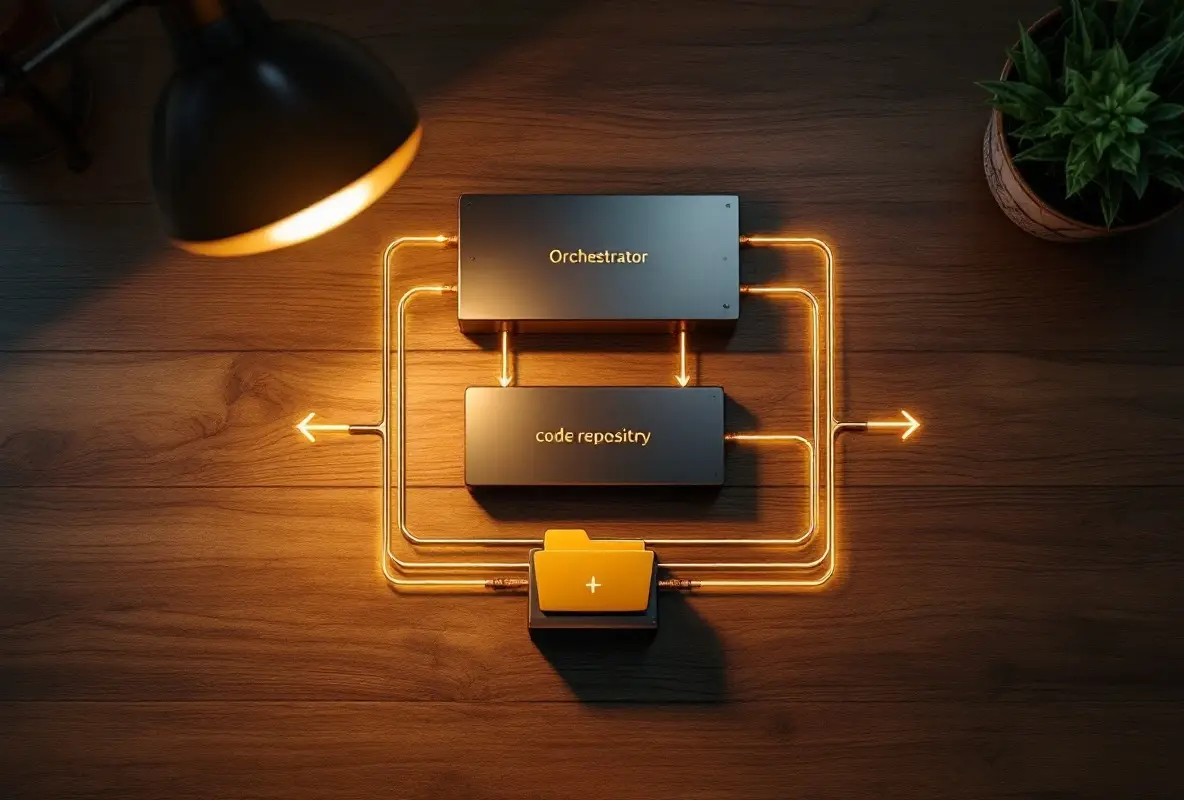
To reduce LLM API costs in 2026, replace overlapping subscriptions with a four-layer stack: one orchestrator (Claude Code or Cursor), one router (OpenRouter, with a 5.5% flat fee), one storage layer (GitHub plus Obsidian as a viewer), and optional compute (a $10 VPS). This pays for what you use instead of paying $100 a month for five thin clients over the same models.
Quick Takeaways
- Five $20 AI subscriptions cost ~$100 a month before any usage.
- OpenRouter charges a flat 5.5% fee and passes provider prices through 1:1.
- Claude prompt caching cuts repeated input costs by 90%.
- GPT-5 pricing went up 8x in 8 months. One vendor is a risk.
- A $6.49/month VPS hosts the agent. Never host the model itself.
- BTO’s full stack runs at roughly $110/month, not $300.
Why Your AI Subscription Stack Is a Leaky Bucket
The leaky bucket is not a metaphor. As of May 2026, a typical solo founder is paying ChatGPT Plus, Claude Pro, Cursor Pro, Perplexity Pro, and Google AI Pro, and most of those tools share the same underlying models. Tactiq’s 2026 comparison shows every one of those plans anchored at $19.99 to $20.
That is $100 a month in fixed cost before a single token is used. Aizolo’s 2026 stack documentation tracks one real builder hitting $110 a month once Grok SuperGrok is added in.
The fragility runs deeper than the price. As an example, GPT-5 launched in August 2025 at $0.625 per million input tokens, and by May 2026 the GPT-5.5 tier had moved to $5 per million input tokens. That is an 8x increase in eight months on the exact rate sheet a one-vendor builder is exposed to.
Death by a thousand subscriptions
This is what makes the leak invisible. Each $20 charge looks defensible on its own and only becomes painful at the end of the year when the total finally lands. Most builders never sit down and add it up.
The second cost is opportunity cost. Each subscription locks you to one vendor’s roadmap, one vendor’s pricing decision, and one vendor’s outage. As a result, when prices move, you have no leverage.
The fix is structural. You stop renting one chat UI per model and start paying for tokens through a layer you control.
The Four Layers That Actually Solve It
Every working LLM stack reduces to four jobs. The orchestrator sends the prompts, the router picks the model, the storage layer holds the context, and the compute layer runs anything that needs to keep running while you sleep.
Most subscription stacks fail because they bundle all four jobs into one closed product per vendor. That means you pay for the same job five times.
The architecture, in one diagram
What Belongs in the Orchestrator Layer?
The orchestrator is the thing on your screen. It is the editor or chat window that sends prompts and receives responses. The job here is keyboard ergonomics and context handling, not model quality.
For BTO, the orchestrator is Claude Code. It has terminal-grade access, can read and write files, and runs against the Claude API directly. As a result, a $100/month Claude Max plan covers the heaviest single line item in the stack.
Why one orchestrator beats five chat apps
Five chat subscriptions all give you the same surface area: a text box and a send button. They differ in keyboard shortcuts and onboarding tutorials. The model underneath is the same model you can hit through the API for cents per session.
If you do not want a coding tool, Cursor and Continue.dev offer the same orchestrator role for non-developers. The principle holds either way. Pick one and route everything else through the router layer.
That single decision collapses the keyboard layer of your stack from five tools into one.
What Does the Router Layer Do?
The router layer is the part of the LLM API costs picture that most people skip and is also where the biggest savings live. OpenRouter is a single API endpoint that exposes 400 plus models from 60 plus providers, and it bills you for what you actually use.
According to OpenRouter’s published pricing, the platform fee is a flat 5.5% on credit purchases. Provider token prices pass through 1 to 1, with no per-call markup.
The free tier alone exposes more than 25 models across four free providers. That is enough to bootstrap a working stack at $0 a month while you decide what to actually pay for.
Why a router beats committing to one vendor
Vendor risk is now an LLM cost optimization issue. As shown above, GPT-5 went from $0.625 to $5 per million input tokens in eight months. A router insulates you from that move because you swap models, not stacks.
Simon Willison, who maintains the most-cited public LLM price tracker, frames it cleanly: “OpenRouter’s USP is that it can route prompts to different providers depending on factors like latency, cost or as a fallback if your first choice is unavailable.” That is the architecture you want when prices are still moving.
For low-stakes tasks like summarization, classification, or routine drafting, you can route to cheaper open-weight models. Groq serves Llama 3.3 70B at $0.59 per million input tokens and $0.79 per million output, at 394 tokens per second. That is 5 to 15x cheaper than GPT-5.5 or Claude Sonnet 4.5 for the same kind of work.
Prompt caching is the biggest single lever
Anthropic charges 10% of the base input rate on a cache hit. The official Claude API documentation confirms the 90% discount on cached input.
For a workflow that loads the same brand guide, style rules, and registries on every call, this single feature is the difference between a $200 month and a $20 month. It is not a marketing claim. It is a published rate.
How GitHub and Obsidian Replace SaaS Storage
The storage layer holds context: research briefs, registries, drafts, anything the LLM needs to read on a future call. For most builders this means a Notion subscription, a project management SaaS, and a separate documentation tool, each with its own bill.
The cheaper answer is also the more durable one. GitHub is the source of truth, free for private repos, and every change is versioned forever. Obsidian is a free local viewer that reads the same Markdown files, with no lock-in.
Why version control beats a SaaS database
When the LLM rewrites a file, you can see the diff. When a session breaks something, you can roll back. Meanwhile a SaaS database silently overwrites itself.
Beyond that, GitHub is already integrated with everything. Your CI runs there, your code lives there, and the agents you build can read and write the same repo. There is no API to learn and no extra bill to pay.
For the indie operator, GitHub plus Obsidian replaces three subscriptions with zero new spend.
When Do You Actually Need a VPS?
You need a VPS only when something has to keep running while you are not at your computer. Cron jobs, social posting, scraping, scheduled rebuilds, anything triggered by time rather than by you hitting enter. That is the entire scope.
A Hostinger KVM 1 VPS costs $6.49 a month for 1 vCPU, 4 GB RAM, 50 GB NVMe, and 4 TB of bandwidth. The KVM 2 tier at $8.99 a month doubles the cores and memory. Meanwhile DigitalOcean’s Basic 1 GiB droplet is $6 a month, and the 2 GiB option is $12.
That is the entire compute spend for a working solo founder stack. Anywhere from $6 to $12 a month, end of layer.
Host the agent, not the model
This is the trap to avoid. “Self-hosted” makes most people think GPU rental, and that math does not work below industrial volume.
According to Braincuber’s 2026 cost analysis, the break-even for self-hosting a model is roughly 500,000 tokens a day, with a hard cliff around 11 billion tokens a month. Below that, API plus router beats GPU rental every time.
Translation for the solo founder: do not host the model. Host the agent that calls the model. The agent is a few hundred lines of Python in a Docker container, and that runs comfortably on the $10 box.
Pay-per-image instead of an image subscription
The same principle applies to image generation. fal.ai serves Flux Kontext Pro at $0.04 an image and Seedream V4 at $0.03. Two images per article at $0.04 is $0.08 of cost.
A $50 a month image generation subscription breaks even at roughly 625 images, which is more than most publishers will use in a year. As a result, pay-per-image wins for almost every solo workflow.
One indie builder documented going from $340 a month across OpenRouter, automation SaaS, and research tools down to a single $69 a month MicroVM running five agents. The architecture works in practice, not just in theory.
$300 vs ~$110: The Real Cost Breakdown
This is what the math looks like when you draw the line down both stacks. The numbers are May 2026 list prices, sourced above.
The typical stacked subscription founder pays about $300 a month, and that is before they have used anything heavily. The BTO stack runs at roughly $110 a month total.
Typical “death by subscription” stack
- ChatGPT Plus: $20
- Claude Pro: $20
- Google AI Pro: $19.99
- Perplexity Pro: $20
- Cursor Pro: $20
- Image generation SaaS: $50
- Notion + other SaaS: $30 to $50
- Automation tool: $20 to $50
That lands between $200 and $300 a month for someone who has not yet shipped a product.
The BTO stack, line by line
- Claude Max (orchestrator subscription): $100
- Hostinger VPS (compute): $10
- OpenRouter usage credits: ~$5 typical, sometimes less
- fal.ai image generation (pay-per-image): ~$5 typical
- GitHub: $0 (free for private repos)
- Obsidian: $0 (free)
That is roughly $120 a month at usage and closer to $110 in a quiet month. The single biggest line is the one chosen orchestrator subscription, and the rest scales with what you actually do.
For more context on the macro trend pushing these prices up, MIT Technology Review named small language models a Top 10 Breakthrough Technology of 2025. Smaller models trained on more focused data sets now perform at the level of last year’s frontier models at a fraction of the cost. That is the macro tailwind for the router approach.

Mistakes to Avoid When You Cut LLM API Costs
Most of the cost-saving research online treats LLM API costs as a procurement problem. It is not. It is a sequencing problem, and the order you make the changes determines whether you save money or just add another tool.
Cancelling subscriptions before the router is wired
The first instinct is to cancel everything on day one. That fails because you are stuck without working tools for the week it takes to set up OpenRouter, billing, and your orchestrator. Instead, set up the router, run a parallel week, then cancel.
The transition cost is the only real risk. Plan it like a migration, not a firing.
Treating the router as just OpenAI in disguise
If you route every call to GPT-5.5 through OpenRouter, you are not saving anything except a 5.5% fee versus paying OpenAI directly. The savings come from using the right model for the job.
Heavy reasoning goes to Claude Sonnet 4.5 or GPT-5.5, drafting and summarization go to Llama 3.3 70B on Groq, and classification goes to even smaller models. That mix is where the LLM cost optimization actually lands.
Trying to self-host the model itself
This is the cliff. A community of builders has tested it on DEV.to and the consensus is consistent: below 500K tokens a day, you lose money self-hosting. Electricity, depreciation, and downtime alone make it more expensive than the API.
Host the agent, not the model. This is the single hardest mental shift for engineers who hear “self-hosted” and think GPU.
Skipping prompt caching
If you load the same context on every call and do not enable caching, you are paying full input rates on data the model has already seen. That is leaving 90% off the table for no reason.
Subscription Stack vs. Self-Hosted Stack
Stacked Subscription Approach
- Monthly cost: ~$200 to $300, fixed regardless of usage
- Pricing risk: Each vendor can raise prices, and you have no leverage
- Model access: One model per subscription, locked to that UI
- Best for: Casual users who want zero setup and predictable billing
- Pros: One-click signup, polished UIs, no API knowledge needed
- Cons: Paying for overlapping features, no vendor diversification, prices anchored to investor subsidies that are ending
Four-Layer Self-Hosted Stack
- Monthly cost: ~$110, scales with actual usage
- Pricing risk: Distributed across 60+ providers via OpenRouter
- Model access: 400+ models behind one API key, swap any time
- Best for: Solo founders, indie builders, small teams shipping with AI daily
- Pros: Usage-priced, vendor-neutral, prompt caching enabled, infrastructure portable
- Cons: One weekend of setup, requires basic comfort with .env files and an API key
“You don’t need six AI subscriptions. You need one orchestrator, one router, one storage layer, and maybe one compute box.”
BTO operating principle
FAQ
Is OpenRouter really cheaper than paying providers directly?
Yes for most workflows, because the fee structure is a flat 5.5% on credit purchases, not a per-call markup. You also gain the ability to switch models without refactoring billing. The only case where direct is cheaper is single-vendor lock-in at scale, where enterprise volume discounts apply.
How do I know how to reduce LLM API costs without breaking my workflow?
Start with the router layer first, before you cancel anything. Wire OpenRouter alongside your current tools for one week, then cut the duplicates. The migration risk is real but bounded to that one-week window.
Do I need to be a developer to run this stack?
No, but you need to be comfortable editing a .env file and following a setup README. The hardest step is creating an API key, which takes about five minutes. If that feels out of reach, start with just the orchestrator change and add layers later.
What is the cheapest LLM API for general use?
For general drafting and summarization in May 2026, Groq’s Llama 3.3 70B is the price-to-performance leader at $0.59 per million input tokens. For heavier reasoning, Claude Sonnet 4.5 at $3 per million input is the typical default. OpenRouter exposes both behind one API key.
Will my data be safer with this stack?
It depends on the provider you route to, not on the architecture. OpenRouter passes calls through to the underlying provider’s policy. For sensitive workflows, route only to providers with explicit no-training policies, which most enterprise-tier APIs offer.
How long does the migration actually take?
About one weekend for a solo builder. Saturday is router setup and orchestrator install, Sunday is moving over your top three workflows and cancelling the duplicates, and Monday is observing what broke and fixing it.
Can I do this without giving up Claude Max or ChatGPT Plus?
Yes, and most builders should keep exactly one orchestrator subscription. The point is not to eliminate all subscriptions, it is to eliminate the overlapping ones. One $20 chat app for casual use is fine if you actually use it.
What is the single biggest lever for cutting LLM API costs?
Prompt caching, by a wide margin. A 90% discount on repeated input is bigger than any model swap or router choice. Set it up first, then optimize everything else around it.
Is this approach still valid if I scale to a team?
Yes, and it scales better than subscription stacks because OpenRouter has team billing and key management built in. A five-person team on one router credit pool is cleaner than five Claude Pro seats and five Cursor Pro seats. The economics improve with scale, not the other way around.
How I Know This
I built Break The Ordinary as a multi-agent AI content system before I wrote the first article. Every post you read here went through a seven-phase pipeline: research, writing, affiliate integration, SEO audit, design, backend validation, PM review. Each phase is a different specialist agent with its own instructions and quality checks.
This stack is the one that runs that pipeline. Claude Code is the orchestrator, OpenRouter handles the routes I do not want pinned to one vendor, and GitHub holds every file the agents read or write. A Hostinger VPS runs the agents that publish to WordPress and post to social while I am not at the keyboard.
I am not a developer by training. I designed the system through structured prompting and process design, and the bill at the end of the month is what it is because the architecture is right, not because I optimized one provider. That is the difference between $300 and $110 in practice.
Closing: The Stack Is the Strategy
Most builders are not overpaying for AI because they bought the wrong tool. They are overpaying because nobody drew them the four-layer picture. Five $20 charges feel like five small decisions, when they are actually one big architectural decision being made for you.
That is the whole point of learning how to reduce LLM API costs as a system rather than a coupon hunt. The router, the cache, and the agent each do work no single subscription can do for you.
The work of building something of your own in 2026 is the work of making those decisions yourself. The stack you choose is the strategy you can afford to run for the next two years, not the next two weeks.
If you want the companion piece, what AI actually means for your career goes into the labor side of the same shift. Read them together. The infrastructure and the role both move at once.
Randal | Break The Ordinary
I’m Randal, the founder of Break The Ordinary, a multi-niche media brand covering business, tech, health, and finance for people who want to build wealth, freedom, and a life worth living. I built BTO as a multi-agent AI pipeline before I wrote a single article, and the four-layer stack in this post is the one running it every day. I share what actually works, what doesn’t, and what most people get wrong.