SoFi USD Stablecoin SoFiUSD: What the Launch Actually Means
Your Bank App Just Got a Stablecoin Tab. Here’s What That Actually Means.
On May 27, 2026, SoFi Technologies launched SoFiUSD — a U.S. dollar stablecoin issued directly by SoFi Bank, N.A. and available inside the SoFi mobile app, alongside checking, savings, and investing. It is the first stablecoin issued by a U.S. national bank to launch on a retail banking platform.
For SoFi’s roughly 14.7 million members, this means a stablecoin tab will appear in the app they already use for payroll deposits, bill pay, and savings. The interesting question is not whether to buy SoFiUSD. It is what slot a bank-issued stablecoin actually fills in your financial life — because the answer is narrower than the launch coverage suggests.

Quick Takeaways
- SoFiUSD (ticker: SOFID) is a U.S. dollar stablecoin issued by SoFi Bank, N.A. and launched inside the SoFi app on May 27, 2026.
- Backed 1:1 by U.S. dollars held in SoFi Bank’s Federal Reserve account — reserves sit inside an OCC-regulated insured depository institution.
- Runs on Ethereum and Solana from day one, built on BitGo’s stablecoin-as-a-service infrastructure.
- Eligible to roughly 14.7 million SoFi members; full rollout expected by early June 2026.
- Launched under the GENIUS Act framework (July 2025) — which sets the rules bank-issued stablecoins must follow.
- Market cap surpassed $100 million on Ethereum within days of launch.
- SoFiUSD pays no yield, is not FDIC-insured, and is not a substitute for a SoFi savings account.
What “Bank-Issued” Actually Changes
You can already buy USDC inside Coinbase. You can already buy PYUSD inside PayPal. You can already buy USDT essentially anywhere. So what is structurally different about SoFiUSD?
Three things — and they matter in opposite directions.
The reserves sit at a chartered bank, not a Treasury fund
Circle’s USDC reserves are held mostly in a money-market fund (BlackRock’s Circle Reserve Fund) and short-dated Treasuries at custodian banks. Tether’s USDT reserves are held in commercial paper, Treasury bills, and gold — and the composition has historically required attestation rather than audit. SoFiUSD’s reserves sit in SoFi Bank, N.A.’s Federal Reserve account. That is the most conservative reserve structure of any major stablecoin. The OCC supervises SoFi Bank directly. There is no money-market fund layer to worry about. There is no commercial-paper exposure. The dollars are dollars, at the Fed, behind a national bank charter. Structurally, this is the most boring stablecoin on the market — and “boring” is exactly what you want from a stablecoin.
It launched on Ethereum and Solana from day one
The token was built on BitGo’s stablecoin-as-a-service platform, which is the same infrastructure quietly powering a growing number of bank and fintech stablecoin pilots. Multi-chain at launch is unusual — most stablecoins start on one network and expand. SoFi’s decision to ship on both Ethereum and Solana from the first day signals intent to be where the on-chain volume actually is, not just where the press coverage lives.
Boring is the feature. SoFiUSD is the most conservatively backed stablecoin you can buy from a U.S. retail app — which also makes it the least exciting.
It pays zero yield, by design
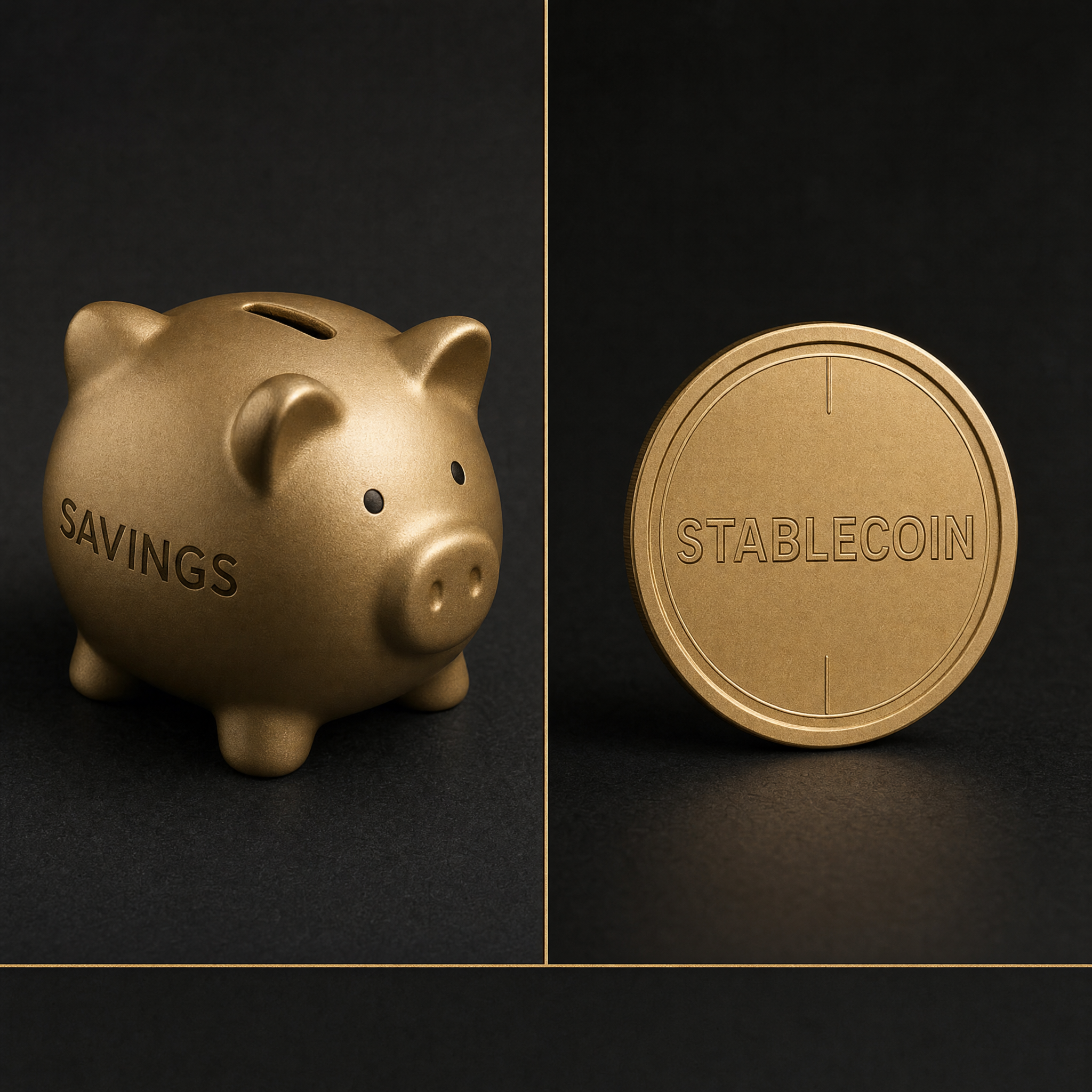
This is the part most retail readers will miss. Under the GENIUS Act, a bank-issued stablecoin cannot pay interest or yield to holders. The reserves earn yield (the bank does — that is the business model), but the holder does not. If you move $10,000 from your SoFi high-yield savings account into SoFiUSD, you give up roughly 4%+ APY for the privilege of holding a token instead of a deposit. There is no return for the holder. There is only utility.
What Slot Does SoFiUSD Actually Fill?
If you cannot earn yield on it and your dollars are already safer in a SoFi checking account (FDIC-insured) or savings account (FDIC-insured plus paying real interest), what is SoFiUSD for? Three real use cases, and a long list of pretend ones.
Use case one: settlement and on-chain transfers. If you ever need to move dollars to or from a crypto exchange, a DeFi protocol, an on-chain merchant, or another stablecoin user — SoFiUSD is now the friction-minimum option for a SoFi member. You hold it in the same app you already use for the rest of your money, and you can send it across Ethereum or Solana without an exchange step.
Use case two: counterparty-safe holding during specific transactions. If you are mid-flow on a multi-step crypto transaction — for example, parking dollars between a sale and a re-buy without going back to fiat — a bank-issued stablecoin is a more conservative parking spot than USDC or USDT for the same job. The cost is zero yield. The benefit is reserves at the Fed under OCC supervision.
Use case three: future on-chain payments. Mastercard secured a New York BitLicense this week, explicitly to support stablecoin and tokenized-deposit settlement. The merchant rails are being built. In 12 to 24 months, paying with a stablecoin at point of sale may be a normal option — and the bank-issued version is the one a regulated merchant network will most likely accept first. For context on the regulatory shift, see our coverage of Trump’s crypto Fed payment-rails order and the related CLARITY Act framework.
Not a use case: replacing your savings account. Zero yield. Not FDIC-insured. Pick the savings account every time for cash you do not need to send on-chain. For more on where cash actually belongs, our breakdown of building an emergency fund covers the trade-offs.
Not a use case: holding it because it sounds modern. Holding a non-yielding bearer instrument is the most expensive way to look financially current. The right comparison is to AI agentic-payment rails, where the stablecoin is the settlement layer — see our coverage of AI agents paying in stablecoins for the system-level picture.
The Read for SoFi Members
When the stablecoin tab appears in your SoFi app, treat it like any new product the bank launches: useful for a specific job, expensive if used for the wrong job. The job it is good at is on-chain settlement of dollars. The job it is bad at is earning a return. Keep cash you need in checking, cash you want yield on in savings, and the small amount you need to actually move on-chain in SoFiUSD. If you have never had a reason to move dollars on-chain, you probably do not need a stablecoin tab open yet — and that is fine.
Frequently Asked Questions
What is SoFiUSD?
SoFiUSD (ticker: SOFID) is a U.S. dollar stablecoin issued by SoFi Bank, N.A. — a chartered U.S. national bank. It launched on May 27, 2026, inside the SoFi mobile app and runs on the Ethereum and Solana blockchains. Each token is redeemable 1:1 for U.S. dollars held in SoFi Bank’s Federal Reserve account.
Is SoFiUSD FDIC-insured?
No. The reserves sit inside a bank, but the stablecoin itself is not a deposit and is not FDIC-insured. If you want FDIC coverage, use SoFi’s checking or savings accounts — not the stablecoin.
Does SoFiUSD pay interest or yield?
No. Under the GENIUS Act framework, bank-issued stablecoins cannot pay yield to holders. The bank earns yield on the reserves; the holder does not. This is the single most important difference from a savings account.
How is SoFiUSD different from USDC or USDT?
SoFiUSD is issued by a chartered U.S. national bank (SoFi Bank, N.A.) and supervised by the OCC. Reserves sit in the Fed account of the issuing bank. USDC is issued by Circle — a non-bank — with reserves held in a money-market fund and at custodian banks. USDT is issued by Tether (offshore) with a more complex reserve composition. SoFiUSD has the most conservative reserve structure of the three.
What blockchains does SoFiUSD run on?
Ethereum and Solana, from launch. The token is built on BitGo’s stablecoin-as-a-service infrastructure, which handles minting and on-chain plumbing.
Can I redeem SoFiUSD for dollars?
Yes — 1:1 inside the SoFi app, which converts SoFiUSD back to U.S. dollars in your linked SoFi account.
Will other banks launch stablecoins now?
Probably. The GENIUS Act gave U.S. national banks a clear regulatory path; SoFi was the first to ship a retail-app version. JPMorgan has had an internal stablecoin (JPM Coin) for institutional use for years. Expect other regional and digital banks to follow over the next 6 to 18 months.
How I Know This
I track stablecoin launches in the same notebook I keep on brokerage products and crypto regulation, because the structural shifts matter more than the daily price tape. SoFiUSD is the cleanest test yet of whether a chartered U.S. bank can deliver a retail-grade stablecoin under the new GENIUS framework. The reserve structure, the multi-chain launch, and the zero-yield constraint are each the most informative parts of the announcement.
I built Break The Ordinary because no one in BTO’s audience should have to read six trade publications and the GENIUS Act to figure out whether their bank app’s new stablecoin tab actually matters. The job is to extract the signal and tell you what to do with it.