SpaceX Bitcoin Treasury 2026: 18,712 BTC in the IPO Filing
What Is a Corporate Bitcoin Treasury?
A corporate Bitcoin treasury is when a company holds Bitcoin on its balance sheet as a reserve asset — similar to how companies hold cash, gold, or short-term bonds. Instead of keeping idle cash in low-yield instruments, companies buy BTC as a long-term store of value and potential hedge against currency debasement.
SpaceX just disclosed 18,712 BTC on its S-1 IPO filing — worth $1.29 billion as of Q1 2026. At today’s price, that stack is closer to $1.45 billion.
This is not a side bet. This is a line item in a document filed with the Securities and Exchange Commission, ahead of what could be the largest IPO in history.

Quick Takeaways
- SpaceX holds 18,712 BTC worth $1.29B at Q1 2026 prices — disclosed in its S-1 IPO filing
- Average acquisition price was ~$35,300 per BTC — the position is now up roughly 2x
- SpaceX is targeting a $1.75 trillion valuation and a June 2026 Nasdaq listing
- This is the largest IPO disclosure of corporate Bitcoin holdings ever filed with the SEC
- Corporate Bitcoin adoption accelerated fast: public companies went from 215,000 BTC in 2020 to over 1 million BTC by end of 2025
- The lesson for individual holders: if institutions use cold storage, you should too
SpaceX’s IPO Filing Has a Line Most People Skipped
When SpaceX filed its S-1 with the SEC in May 2026, most headlines fixated on the valuation: $1.75 trillion, Starlink, xAI, the biggest IPO in history. Buried in the balance sheet was something worth more attention: 18,712 Bitcoin, purchased at an average cost of $35,300 per coin, now worth approximately $1.45 billion at current prices.
This is not a rumor or a leaked document. It is a sworn disclosure filed with regulators before the company sells shares to the public. SpaceX did not buy Bitcoin to speculate. The people running a company targeting a $1.75 trillion valuation decided that BTC was the right place to hold a portion of their treasury reserves.
That decision, made at $35,300 per BTC, is now sitting on roughly a 2x gain. The position is worth more than Tesla’s entire remaining Bitcoin stack of 11,509 BTC – a company that bought in at similar prices, sold most of it in 2022, and never bought back in.
What SpaceX’s BTC Position Tells You About Corporate Conviction
Companies do not put $661 million into an asset they treat as a gamble. Treasury decisions at this scale go through boards, CFOs, and legal teams. They get stress-tested against liquidity needs, risk models, and regulatory requirements. SpaceX disclosing BTC openly in an SEC filing signals something clear: this is no longer a fringe allocation.
Strategy (formerly MicroStrategy) holds 843,738 BTC – 45 times SpaceX’s stack. Japan’s Metaplanet has accumulated 40,177 BTC and surpassed Tesla in corporate holdings. As of December 2025, public companies collectively held over one million Bitcoin, up from roughly 215,000 at the end of 2020. That trend is not reversing.
Every time a major company files with the SEC and lists Bitcoin on the balance sheet, it becomes harder to call Bitcoin a speculative instrument for retail traders. It is functioning exactly as its design intended: as a fixed-supply reserve asset that cannot be diluted by a central bank.
The Self-Custody Question Every BTC Holder Needs to Answer
SpaceX does not keep $1.45 billion in BTC on a software wallet connected to the internet. Neither does Strategy, Metaplanet, or any institutional Bitcoin holder that has been around long enough to know the risk. They use cold storage – hardware wallets or multi-sig custodial setups that keep private keys offline and out of reach of remote attackers.
Most individual Bitcoin holders use a level of security that no institution would accept for its own treasury. Coins on exchanges are not your coins – they are an IOU from the platform. Coins on a hot wallet connected to your phone are one phishing attack from gone. The eToro self-custody situation from earlier this year showed exactly what happens when retail holders discover their “holdings” were never theirs in the first place.
SpaceX put $661 million into Bitcoin. The security protecting that position reflects the seriousness of the investment. If you own Bitcoin – even a fraction of a coin – your security posture should match the seriousness of what you are holding.
Disclosure: This article contains affiliate links. If you purchase a Trezor hardware wallet through the links below, Break The Ordinary earns a commission at no extra cost to you. We only recommend products we have independently evaluated as genuinely useful.
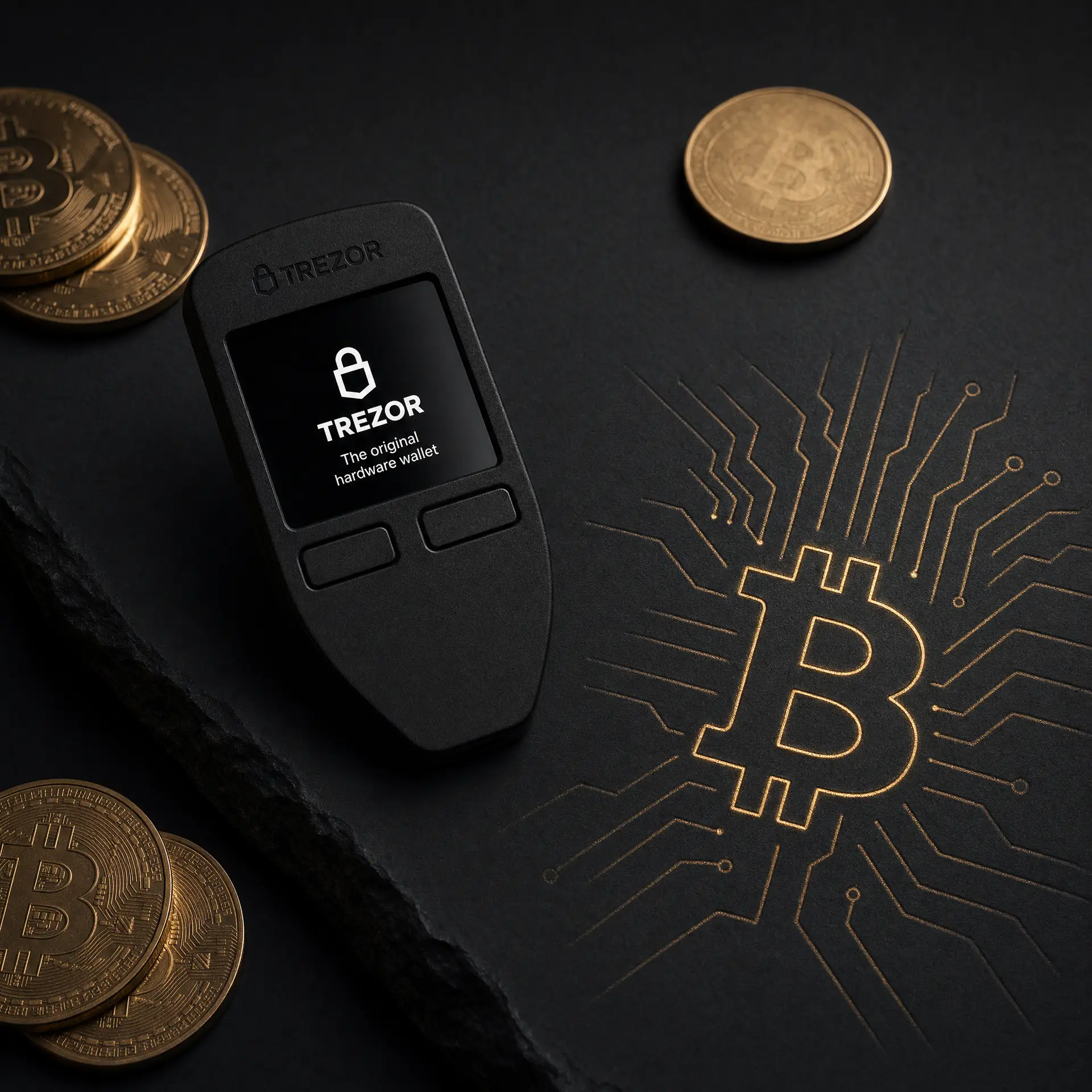
A hardware wallet like the Trezor Safe 5 keeps your private keys completely offline — your Bitcoin never touches an internet-connected device during signing. For those getting started, the Trezor Safe 3 covers the same core security at a lower price point. Both are manufactured by SatoshiLabs and are among the most widely used hardware wallets globally.
The IPO Angle: SpaceX Is About to Be Publicly Priced — With BTC on the Books
SpaceX is targeting a Nasdaq listing in June 2026 under the ticker SPCE, with a valuation range between $1.5 and $2 trillion. If it hits $1.75 trillion, the IPO raise would surpass Saudi Aramco’s 2019 listing and become the largest in history. The roadshow begins the week of June 8.
Starlink’s subscriber base doubled year-over-year — from 5 million in Q1 2025 to 10.3 million in Q1 2026 — giving the company a fast-growing recurring revenue engine separate from its launch business. The February 2026 acquisition of xAI adds an AI component to the story.
For Bitcoin holders, the SpaceX IPO is a second-order signal: institutional money flowing into a company with $1.45B in BTC on the balance sheet is institutional money indirectly taking Bitcoin exposure. Every pension fund, sovereign wealth fund, and retail investor who buys SPCE at IPO owns a company with Bitcoin reserves. That kind of embedded exposure, multiplied across millions of shareholders, quietly deepens Bitcoin’s integration into the mainstream financial system.
Frequently Asked Questions
Why does SpaceX hold Bitcoin instead of keeping cash?
SpaceX, like other companies with Bitcoin on the balance sheet, treats BTC as a reserve asset rather than a speculative trade. Cash held in bank accounts loses purchasing power to inflation over time. Bitcoin has a fixed supply of 21 million coins. Companies buying BTC are making a long-term bet that scarcity outperforms the debasement of fiat currency in dollar terms.
Does SpaceX’s Bitcoin holding affect the IPO valuation?
Yes, though indirectly. The $1.45B BTC position contributes to SpaceX’s net assets and would be marked to market on the balance sheet. For public investors buying shares, SpaceX’s Bitcoin exposure is a built-in component of the investment. If Bitcoin appreciates after the IPO, that gain flows through to the balance sheet — and ultimately to shareholder equity.
How does SpaceX’s Bitcoin position compare to other companies?
SpaceX holds 18,712 BTC — more than Tesla’s remaining 11,509 BTC, and significantly more than most publicly traded companies. Strategy holds 843,738 BTC, making it 45 times larger. Japan’s Metaplanet holds 40,177 BTC and is the largest corporate holder in Asia. As of late 2025, public companies collectively held over 1 million BTC globally.
Should I buy SpaceX stock because of its Bitcoin holdings?
That is a financial decision you need to make based on your own situation. Bitcoin exposure through a company stock is indirect — you are also getting exposure to SpaceX’s launch business, Starlink, xAI, and the execution risk of all three. If your goal is pure Bitcoin exposure, owning BTC directly (in cold storage) is more direct. This article is for informational purposes only and does not constitute financial advice.
What is cold storage and why does it matter?
Cold storage means keeping the private key to your Bitcoin on a device that is never connected to the internet. Hackers cannot steal what they cannot reach. Hot wallets (software wallets on internet-connected devices) are convenient but exposed. Exchanges are counterparty risk — they hold the keys, not you. Cold storage hardware wallets like Trezor give you full control. You can read the full case for self-custody in our Bitcoin Whitepaper breakdown.
How I Know This
I have been watching the corporate Bitcoin treasury trend since MicroStrategy’s first purchase in 2020. What started as a single CFO’s bet has become a pattern: companies with concentrated cash positions and long time horizons quietly replacing yield-seeking instruments with BTC. I have read the original S-1 disclosures, tracked the TLDR Crypto coverage since January, and spent time understanding the custody and self-sovereignty angle because that is where the practical relevance lives for readers of this site.
I am not a financial advisor. I do not know when SpaceX’s IPO will price or what Bitcoin will do next week. What I can tell you is how to read the signal correctly and what it means for your own approach to holding BTC.
What You Should Take From This
SpaceX is not buying Bitcoin to be cool. A company being priced at $1.75 trillion does not put $661 million into an asset on a whim. The disclosure signals what serious treasury managers already know: Bitcoin is a viable long-term reserve asset with a fixed supply and no issuer who can dilute it.
The practical implication for individual holders is the same as it has always been — own it directly, hold the keys yourself. If you already own BTC and it is sitting on an exchange or a hot wallet, the SpaceX filing is a useful reminder to treat your stack with the same seriousness that a $1.75 trillion company treats its treasury.
The IPO is coming in June. The filing is public. The Bitcoin is real. That combination — institutional disclosure, regulatory scrutiny, and a market-cap-setting event — is about as mainstream as crypto gets.
Build the rest of your financial foundation
If you are thinking seriously about Bitcoin as a long-term asset, it belongs inside a broader financial structure. Start with the basics of building your first investment portfolio and understand what role Bitcoin plays in an allocation that includes equities, bonds, and hard assets. Take custody seriously — the Bitcoin Whitepaper breakdown explains why self-custody is not optional if you are serious about financial sovereignty.
This article is for informational purposes only and does not constitute financial advice. Bitcoin and cryptocurrencies are volatile assets. Always do your own research and consult a qualified financial professional before making investment decisions.