The Stablecoin Market Just Crossed a Sovereign-Scale Line
The combined value of stablecoins – mostly USDT (Tether) and USDC (USD Coin) – reached $322 billion as of late May 2026, exceeding the official foreign-exchange reserves of 95 countries, according to a Bank for International Settlements analysis covered by CoinDesk on May 26.
Only 14 nations now hold larger FX reserves than the dollar-pegged stablecoin market. The UK, Canada, Mexico, the UAE, Thailand, and Poland do not. China and Japan still do. That is the headline – and the structural picture underneath it is more important than the number.

Quick Takeaways
- Total stablecoin market value: $322 billion as of late May 2026.
- Exceeds the foreign-exchange reserves of 95 sovereign nations, including the UK, Canada, Mexico, UAE, Thailand, and Poland.
- Only 14 countries hold larger FX reserves – China, Japan, Russia, India, Taiwan, and Germany lead the list.
- USDT and USDC dominate; non-dollar stablecoins remain a thin sliver of total supply.
- The Bank for International Settlements flagged stablecoin growth as a driver of currency depreciation in emerging markets.
- For an individual holder, the practical questions are about collateral, custody, and counterparty risk – not just yield.
Why a $322 Billion Number Is Actually a Regulatory Story
For most of stablecoin history, the size of the market was a crypto-industry talking point. Past a certain threshold, that changes. The Bank for International Settlements – the central bankers’ central bank – does not write working papers about niche assets. It writes them when an instrument starts moving capital flows at sovereign scale.
That threshold has now been crossed. The BIS analysis cited by CoinDesk states that “cross-border stablecoin flows have grown substantially since 2022, with particularly pronounced activity in regions experiencing high inflation and exchange rate volatility.” That is a polite way of saying people in unstable currencies are using USDT and USDC as a synthetic dollar account.
The BIS also flagged the downside. Increases in stablecoin flows, the institution reported, “are associated with subsequent domestic currency depreciation, deviations from covered interest parity and widening wedges between stablecoin-implied and official exchange rates in segmented markets.” Translation: when a country’s residents start switching savings into stablecoins, the local currency weakens, and the gap between the official exchange rate and the on-chain dollar rate widens.
This is the same dynamic that drives AI agents settling in USDC and tokenized assets moving on-chain – a parallel financial system is being built on private rails, and central banks are now watching it the way they watch eurodollar markets.
What the Composition Tells You About Risk
Not all $322 billion is the same risk. The composition matters more than the total.
USDT (Tether) sits at roughly $160 billion in circulation, backed by a mix of US Treasury bills, cash, secured loans, and a smaller allocation to other assets. Tether publishes quarterly attestations, not full audits. The opacity is the well-known trade-off – Tether moves faster and supports more chains than any competitor, but reserve visibility is structurally weaker than what a traditional money-market fund offers.
USDC (USD Coin), issued by Circle, sits at roughly $60 billion. It is backed by short-duration US Treasuries and cash held at major US banks, with monthly attestations and a clear regulated structure. The trade-off goes the other way – tighter reserve transparency, tighter regulatory footprint, but more counterparty exposure to the US banking system (a fact made famous during the March 2023 SVB episode when USDC briefly traded at 88 cents).
The remainder of the market is split among smaller dollar-pegged tokens – PYUSD, FDUSD, USDe – plus a thin sliver of euro-, yen-, and franc-denominated stablecoins. The dollar dominance is structural, and the BIS data confirms it: cross-border stablecoin flows are an extension of the dollar’s reach, not a competitor to it.
What This Actually Means for You
Three practical things change when the stablecoin market reaches this scale.
Disclosure rules are coming. The BIS does not flag an asset class as material to capital flows and then stop there. Expect tighter reserve disclosure requirements, restrictions on cross-border use, and – in some jurisdictions – capital-control responses. If you hold stablecoins as a savings instrument, the regulatory perimeter you are operating inside will change. Knowing which issuer’s compliance posture you are exposed to becomes a meaningful question, not a hypothetical one.
Counterparty risk is the variable that moves most. A stablecoin is only as good as the entity issuing it and the assets backing it. USDT and USDC have different risk profiles, and a yield-bearing stablecoin (Ethena’s USDe, MakerDAO’s DAI variants) has a different one again. If you hold a stablecoin position large enough to matter, the work is no longer “which exchange has the best rate” – it is “what is actually behind this token, and how do I see it in the next stress event?”
Custody is no longer optional. Coins sitting on a centralized exchange are an IOU from that exchange. That worked when the asset was a side bet. At $322 billion in aggregate, regulators are going to start treating stablecoin custody the way they treat broker-dealer custody – and the simplest way to opt out of that risk surface is to hold your own keys.
Disclosure: This article contains affiliate links. If you purchase a Trezor hardware wallet through the links below, Break The Ordinary earns a commission at no extra cost to you. We only recommend products we have independently evaluated as useful for the topic at hand.
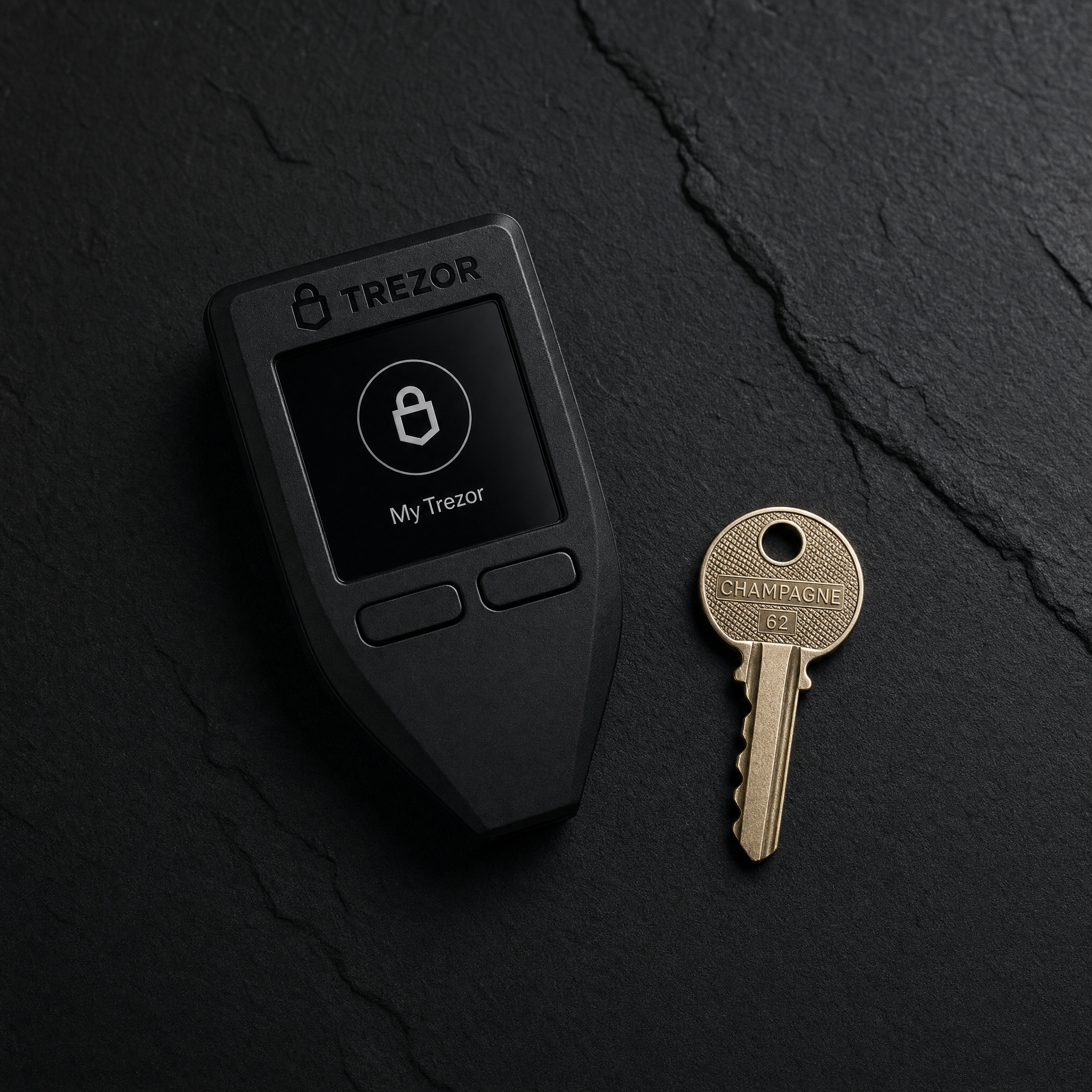
A hardware wallet like the Trezor Safe 5 stores your private keys offline and signs every transaction on the device itself, never on an internet-connected computer. It supports USDC, USDT, and major dollar-pegged stablecoins across multiple chains. For holders who want the same security at a lower price point, the Trezor Safe 3 covers the core threat model. Both are made by SatoshiLabs, the team that built the original Trezor in 2013.
Frequently Asked Questions
What does it mean that stablecoins exceed the FX reserves of 95 countries?
Foreign-exchange reserves are the holdings of foreign currency a country’s central bank keeps to defend its own currency and settle international payments. When the total value of privately issued dollar-pegged tokens exceeds the FX reserves of 95 sovereign nations, it means a non-state monetary instrument is now larger – in dollar terms – than the official reserve buffer of countries like the UK, Canada, and Mexico. It is a measure of scale, not of sovereignty.
Are stablecoins safe to hold?
It depends on which stablecoin and where you hold it. USDC and USDT have different reserve structures, audit cadences, and counterparty exposures. A stablecoin held on a centralized exchange exposes you to that exchange’s solvency in addition to the issuer’s. A stablecoin held in self-custody removes the exchange risk but keeps the issuer risk. There is no “safe” stablecoin – there are different risk profiles you can choose between.
Why does the BIS care about stablecoins?
Because cross-border stablecoin flows are now large enough to move official exchange rates in emerging markets. The BIS analysis specifically tied stablecoin inflows to subsequent domestic currency depreciation. When a country’s residents shift savings into USDT or USDC, the demand for the local currency falls. That is the kind of dynamic central banks have to model.
Are USDT and USDC the same risk?
No. USDT (Tether) is larger, faster, multi-chain, and discloses reserves via attestation rather than full audit. USDC (Circle) is smaller, US-banking-regulated, and discloses monthly with a tighter transparency posture. USDC briefly de-pegged to 88 cents during the SVB collapse in March 2023; USDT has had multiple historical de-pegging episodes of its own. Both have recovered every time. Risk is not zero in either case.
Should I move stablecoins to self-custody?
If your position is small enough that exchange convenience matters more than counterparty risk, a regulated exchange is fine. If your position is large enough that losing it would materially affect your financial picture, self-custody removes the exchange as a failure point. This article is for informational purposes only and is not financial or tax advice.
How I Know This
I track stablecoin attestations and BIS working papers the same way I track corporate Bitcoin treasury announcements – because the structural shifts in who holds what are more useful for long-term decisions than the daily price ticker. Stablecoins crossing sovereign-scale FX reserves is not a price story. It is a regulatory and architectural story, and the implications run for years.
I built Break The Ordinary as a structured content system because no one in BTO’s audience has time to read every BIS paper or every issuer attestation. The job here is to pull the signal out and tell you what to actually do about it.
What You Should Take From This
The stablecoin market crossing $322 billion is a milestone, but the more useful frame is this: the dollar’s reach is being extended via private rails at a scale that now exceeds the reserves of 95 sovereign nations. That changes the regulatory perimeter you operate inside as a holder, and it elevates two questions you should be able to answer about every stablecoin position you hold – what is the collateral, and where are the keys.
If you cannot answer both cleanly, the next stress event will answer them for you.
Build the rest of your foundation
Stablecoins are one piece of a portfolio that has to make sense as a whole. If the rest of yours is still being assembled, start with how to build your first investment portfolio, then read why most people never build wealth. The patterns that hold someone back at 25 are the same ones that hold them back at 50 – just compounded.