Published: June 4, 2026 · Last updated: June 4, 2026
The DeepSeek Funding Round 2026: A Founder-Ownership Masterclass
The DeepSeek funding round in 2026 is the kind of deal builders should study, not just read. The Chinese AI lab is set to raise about 50 billion yuan, roughly $7 billion, in its first-ever outside round, per CNBC sourcing. The headline number is big. The structure is the real lesson.
Founder Liang Wenfeng is reportedly putting in 20 billion yuan of his own money, about $2.8 billion, which is roughly 40% of the total. The rest comes from fewer than 10 investors. After years of refusing outside capital, DeepSeek is raising on its own terms, and that is a story about ownership and control that applies far beyond AI. If you are thinking about how you raise and grow, our take on entrepreneurship in 2026 pairs well with this.
What This Article Covers
- What DeepSeek is actually raising and from whom
- Why the founder writing the biggest check matters
- How efficiency became negotiating leverage
- What a tight cap table buys you
- The practical lessons for any builder
- Frequently asked questions
The DeepSeek funding round in 2026 is the lab’s first outside raise: about 50 billion yuan (roughly $7 billion), with founder Liang Wenfeng personally committing about 20 billion yuan (around $2.8 billion) and the rest from fewer than 10 investors, per CNBC. It matters because the structure, a founder-anchored check and a tiny cap table, is a masterclass in keeping control while raising serious money.
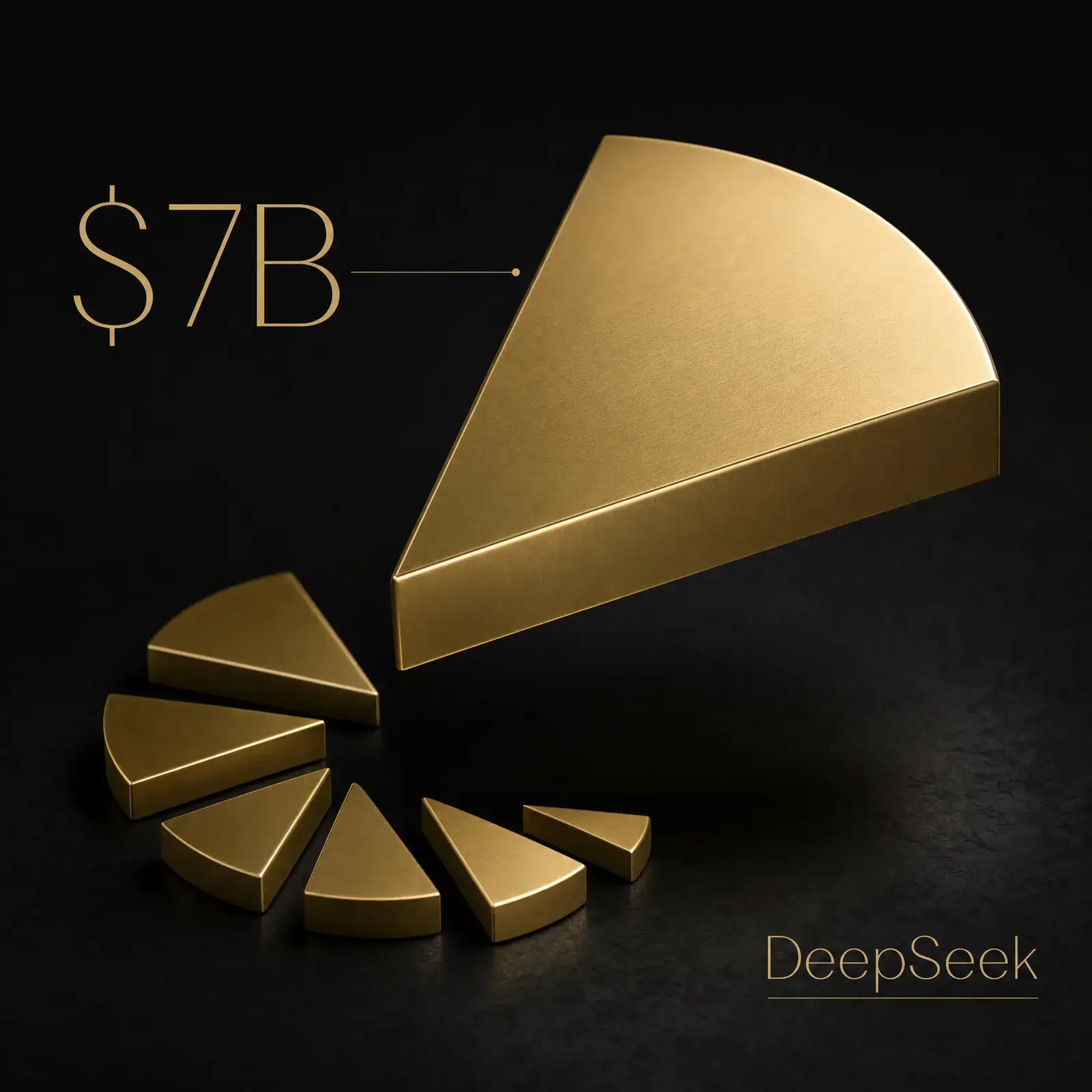
The short version: DeepSeek is raising about $7 billion, the founder is the single biggest investor in his own round, and there are no stated plans to go public. That combination is rare, and it is rare for a reason. It only works when your numbers give you the leverage to dictate terms.
Quick Takeaways
- DeepSeek is raising about 50 billion yuan, roughly $7 billion, per CNBC.
- Founder Liang Wenfeng is reportedly committing about 20 billion yuan, around $2.8 billion.
- That is roughly 40% of the round, funded by the founder himself.
- Fewer than 10 outside investors are reported to be involved.
- The round is expected to close within weeks of the June 3 report.
- No IPO plans have been stated, unlike several Western AI labs.
What Is DeepSeek Raising, and From Whom?
According to CNBC, DeepSeek is slated to draw about 50 billion yuan, roughly $7 billion, in its maiden funding round, with sources expecting it to close within a couple of weeks. Some outlets convert the same yuan figure to about $7.4 billion at a current exchange rate, so treat the dollar number as an approximation around $7 billion.
Reporting indicates the round is being kept deliberately small in investor count, with fewer than 10 participants. Among the prospective outside backers named in coverage are Tencent and CATL as the largest, alongside others such as China’s national AI fund, NetEase, and JD.com, per reporting carried by Yahoo Finance. The reported post-money valuation lands around $52 billion to $59 billion.
No stated path to an IPO
Just as notable is what is missing. DeepSeek has made no statements about a future listing, which contrasts sharply with the public-market ambitions other major AI labs have signaled. A founder funding a large slice of his own round, a short investor list, and no IPO clock describe a company raising money without giving up the steering wheel.
Why Does the Founder Writing the Biggest Check Matter?
The most quoted figure here is not the $7 billion. It is the $2.8 billion that Liang Wenfeng is reportedly putting in himself. When a founder is the largest investor in his own round, the message to everyone else at the table changes. He is not asking others to bet on something he will not.
Skin in the game changes the conversation
Outside investors price risk partly on conviction. A founder who anchors his own round with personal capital removes a layer of doubt and, just as importantly, keeps a commanding ownership position. He does not have to accept the control terms a desperate founder would. That is the quiet advantage of not needing the money in the first place.
The headline is not the $7 billion. It is that the founder is the biggest check in his own round, and that buys him the right to set the terms.
Break The Ordinary
How Did Efficiency Become Negotiating Leverage?
DeepSeek’s reputation was built on cost. Its V3 and R1 models drew global attention for delivering frontier-class results at a fraction of competitors’ reported training spend. The headline figures, like the roughly $5.6 million training run cited for V3, understate the full bill once you add hardware and research, but the broader point holds: DeepSeek does more with less. This is the same discipline we explored in our look at AI SaaS margins in 2026.
That efficiency is not just an engineering story. It is a financing story. A company that can build competitive products cheaply does not need to raise constantly, and a company that does not need money holds the power in any negotiation. DeepSeek spent years funded by founder Liang’s quant hedge fund, High-Flyer, declining venture capital while it proved its approach. By the time it chose to raise, it could choose the terms.
Strong unit economics let you skip the ladder
The standard playbook is a ladder of rounds, each one trading equity and control for cash to fund the next stage. DeepSeek skipped most of those rungs. Strong unit economics meant it could go straight to a single large round, on its own schedule, with the founder leading the check. If you want a grounded view of where AI spending actually pays off, our piece on AI spending and ROI in 2026 is a useful companion.
What Does a Tight Cap Table Buy You?
A cap table is just the list of who owns your company. The more names on it, and the larger their stakes, the more voices have a claim on your decisions. DeepSeek’s reported fewer-than-10 investor list is the opposite of the crowded cap tables many startups accumulate by accident.
Fewer owners, clearer decisions
A tight cap table is easier to align, faster to get decisions through, and far less likely to force a founder into moves he does not believe in. Combined with a founder who holds a dominant stake, it means the company answers to its own conviction rather than to a committee of outside interests. That is what control actually looks like in practice.
The Practical Lessons for Any Builder
You will probably never raise $7 billion, and that is not the point. The principles scale down to a freelancer, a small business, or a first product. The first lesson is that leverage comes from not needing the deal. Build something that generates its own cash, and you negotiate from strength instead of desperation.
The second lesson is to keep your ownership and your decision-makers few. Every stake you give away early, before you have to, is leverage you hand to someone else. The third is that efficiency is a strategy, not a virtue. Doing more with less is what lets you skip the rungs that cost other founders their control. The tools matter here too, which is why we keep a running list of the best AI tools in 2026 for builders who want to stay lean.
Frequently Asked Questions
What is the DeepSeek funding round in 2026?
It is DeepSeek’s first-ever outside funding round, reported by CNBC at about 50 billion yuan, roughly $7 billion. It is expected to close within weeks of the early-June 2026 report.
How much is Liang Wenfeng investing personally?
Reporting indicates the founder is committing about 20 billion yuan of his own money, around $2.8 billion, which is roughly 40% of the round. That would make him the single largest investor in his own raise.
How many investors are in the round?
Coverage describes fewer than 10 investors. Named prospective backers include Tencent and CATL as the largest, alongside others, though the final list may change before closing.
What is DeepSeek’s valuation?
Reports put the post-money valuation at roughly 350 to 400 billion yuan, or about $52 billion to $59 billion. As with the round size, treat the dollar figures as approximations.
Is DeepSeek planning an IPO?
No. As of the reporting, DeepSeek has made no statements about a future listing, which sets it apart from several Western AI labs that have signaled public-market ambitions.
Why did DeepSeek wait so long to raise outside money?
DeepSeek was funded for years by founder Liang’s quant hedge fund, High-Flyer, and its low-cost model approach meant it did not need to raise. That self-funding is what gave it the leverage to raise later on its own terms.
What is the lesson for a small business or solo builder?
The principles scale down. Build something that funds itself, keep your ownership and decision-makers few, and treat efficiency as a strategy. Strong economics let you negotiate from strength and keep control.
Is this investment advice?
No. This is a business news analysis for informational purposes. It does not recommend buying or selling anything, and DeepSeek is a private company in any case.

How I Know This
I came to this country as an immigrant and built from scratch, with no safety net and no investors waiting to hand me money. That taught me something most advice skips: the most valuable thing you own early is your own work, and the fastest way to lose it is to give it away before you have to.
So a story like this lands differently for me. Watching a founder anchor his own round and keep his cap table tight is not a flex, it is a principle. Build something that funds itself, protect your ownership, and you get to decide where it goes. That is the freedom most people trade away too cheaply.
The Bottom Line
The DeepSeek funding round in 2026 is a $7 billion headline wrapped around a simple lesson. Efficiency buys leverage, leverage lets you keep control, and control is what lets you build on your own terms instead of someone else’s.
That is the clarity Break The Ordinary exists to give you. You do not need a Chinese AI lab’s balance sheet to apply the principle. You need to build something real, keep your ownership, and refuse to give away the steering wheel before you have to. If a leaner stack would help, the tools in our best AI tools guide are a practical next step.
Randal is the founder of Break The Ordinary, where he documents what actually works for building independence. As an immigrant who built from scratch, he reads a deal like this through the lens of someone who knows the value of owning your own work. He writes from real experience, not theory.