Published: May 17, 2026 | Last Updated: May 17, 2026
How Much Cardio Do You Need? Zone 2, VO2 Max, and What the Science Actually Says
How much cardio do you need is one of the most misunderstood questions in men’s fitness, and the answer most people get is dangerously incomplete. The standard response is 150 minutes per week, which comes from the WHO guidelines, and it is technically correct. The problem is that 150 minutes is the floor, not the target.
It is the minimum below which your all-cause mortality risk starts climbing materially, not the number that moves the longevity curve in your favor. Most men 25 to 35 are doing one of two things: grinding through random 30-minute treadmill sessions that accomplish nothing measurable, or skipping cardio entirely because they read something about it killing gains. Both are wrong.
The research on this has gotten unusually clear in the past decade. VO2 max, the cardiovascular system’s ceiling for oxygen delivery, is now among the strongest predictors of all-cause mortality in the medical literature, outperforming cholesterol, blood pressure, and fasting glucose as a survival metric. The data on Zone 2 training and how much cardio per week actually moves that number is specific and actionable. This article gives you the science and the protocol.
If you accept that your body is your most important long-term asset, then VO2 max is the single best metric for how fast that asset is depreciating. Cardio connects directly to the testosterone and cortisol discussion in how to naturally increase testosterone, and to the sleep quality mechanisms covered in how to improve sleep quality. For men who are also lifting, the concurrent training question, whether cardio kills your gains, is answered directly in this article and pairs with the evidence in the benefits of strength training for men.
Medical Disclaimer: This article is for informational and educational purposes only and does not constitute medical advice, diagnosis, or treatment. The information presented here reflects published research and does not replace the guidance of a qualified healthcare professional. Consult a licensed physician or exercise medicine specialist before making changes to your exercise routine, particularly if you have any cardiovascular, metabolic, or musculoskeletal conditions. Individual results vary. References to research findings are intended to summarize published data, not to make clinical recommendations.

What Is Zone 2 Cardio?
Zone 2 cardio is exercise performed at the highest intensity where blood lactate remains stable, typically below 2 mmol/L. At this intensity, the body burns fat as its primary fuel source and signals mitochondrial growth, the biological machinery that determines your long-term cardiovascular capacity. It is the foundation of every evidence-based longevity-focused cardio protocol because it produces the metabolic and structural adaptations that Zone 5 intervals and random moderate-intensity work cannot replicate.
How Much Cardio Do You Need?
At minimum: 150 to 300 minutes of moderate-intensity aerobic activity per week (WHO 2020 guidelines). For meaningful longevity benefit, the evidence points to 3 to 4 hours of Zone 2 cardio per week plus one weekly VO2 max session of 30 minutes. That protocol is supported by exercise physiologist Iñigo San Millán and physician Peter Attia, grounded in the Mandsager et al. 2018 JAMA Network Open mortality data covering 122,007 patients.
Quick Takeaways
- The WHO minimum of 150 min/week is the floor, not the optimization target
- VO2 max predicts all-cause mortality better than cholesterol or BMI
- Zone 2 cardio (stable lactate below 2 mmol/L) builds the aerobic engine
- HIIT is superior for raising VO2 max ceiling, but cannot replace Zone 2
- Three Zone 2 sessions of 45 min each minimize interference with strength gains
- The 80/20 split: 80% low intensity, 20% high intensity, is the research-backed distribution
- Running causes more interference with hypertrophy than cycling or rowing
- Finding Zone 2 without a lab: use the talk test or the MAF 180-minus-age formula
The VO2 Max Case: Why Cardiorespiratory Fitness Is the Strongest Longevity Predictor
In 2018, researchers at the Cleveland Clinic published a retrospective cohort study in JAMA Network Open that most men have never read. The study, led by Mandsager et al., tracked 122,007 patients over a median of 8.4 years and measured their cardiorespiratory fitness through exercise treadmill testing. The finding was stark: being low-fit (bottom 25th percentile for VO2 max) was a greater predictor of all-cause mortality than smoking, coronary artery disease, diabetes, or hypertension in the same study population.
Moving from the low-fit category to the elite category (top 2.3%) was associated with an 80% reduction in all-cause mortality risk, with a hazard ratio of 0.20 (95% CI 0.16 to 0.24), per Mandsager et al. For context, quitting smoking is associated with roughly a 50% mortality risk reduction in most analyses. The fitness ceiling effect was zero. There was no point at which more cardiovascular fitness stopped protecting you.
Being Fit Beats Being Thin
A 2024 systematic review and meta-analysis in the British Journal of Sports Medicine (Weeldreyer et al., 20 articles, 398,716 observations) confirmed the fitness-over-weight argument with hard numbers. Normal-weight individuals who were unfit had nearly twice the all-cause mortality risk of fit individuals, regardless of BMI category, with a hazard ratio of 1.92 (95% CI 1.43 to 2.57). Fit-but-overweight individuals showed no statistically significant mortality difference compared to fit normal-weight individuals.
In other words, a man who carries extra weight but trains regularly is statistically safer than a thin man who does not train. This does not mean weight is irrelevant. It means cardiorespiratory fitness is a more powerful lever than body weight for the outcomes that matter most.
What VO2 Max Actually Measures
VO2 max is the maximum volume of oxygen your cardiovascular system can deliver and your muscles can consume per minute, measured in milliliters per kilogram of body weight per minute (mL/kg/min). It is both a ceiling and a measure of efficiency. A higher VO2 max means your heart pumps more blood per beat, your capillary networks are denser, your mitochondria are more numerous and better calibrated, and your muscles extract oxygen more completely from the blood that passes through them.
For reference, ACSM normative data for men aged 25 to 34 places the population distribution roughly as follows: below 38 mL/kg/min is poor; 39 to 43 is fair; 44 to 49 is average; 50 to 55 is good; above 56 is excellent. These cut-points vary by classification system, and individual lab testing provides the most accurate personal baseline. The practical takeaway: an average 30-year-old man sits measurably below where the Mandsager data shows the longevity curve bending in his favor.
Why Peter Attia Calls VO2 Max the Top Longevity Metric
Physician Peter Attia, author of Outlive (2023), has consistently described VO2 max as “the most powerful longevity metric we have access to.” That is his editorial position, grounded in the Mandsager et al. data and several other large prospective studies. The counter-argument in the geroscience literature is that grip strength, sleep quality, and social connection also show strong mortality associations. Attribute that framing to Attia, not to an uncontested research consensus. What is not contested: VO2 max is among the strongest and most directly trainable predictors of longevity available.
Zone 2 Training: What It Is, Why It Works, How Much You Need
Zone 2 is not simply “moderate intensity.” The physiological definition, as established by exercise scientist Iñigo San Millán, PhD, Associate Professor at the University of Colorado School of Medicine and coach to professional cycling champion Tadej Pogacar, is the highest exercise intensity at which blood lactate concentration remains stable, typically between 1.7 and 2.0 mmol/L. Below this threshold, the aerobic system does the primary work. Above it, glycolysis accelerates and lactate begins to accumulate faster than it can be cleared.
What Happens at the Cellular Level
At Zone 2 intensity, the body relies primarily on type 1 slow-twitch muscle fibers, which are dense in mitochondria and optimized for fat oxidation. Lactate produced by fast-twitch fibers is taken up and oxidized by these same slow-twitch fibers, a process called lactate shuttle. The sustained demand at this intensity activates PGC-1 alpha, the master regulator of mitochondrial biogenesis, more effectively than any other exercise intensity.
More mitochondria means more capacity to produce energy aerobically, lower resting heart rate over time, improved fat oxidation at higher intensities, and better insulin sensitivity. As San Millán has explained across multiple appearances on The Drive with Peter Attia (Episodes 85 and 201), this is why Zone 2 is the training intensity at which the most important long-term metabolic adaptations occur. It is not simply “easy cardio.” It is the specific intensity at which mitochondrial growth signals are strongest and metabolic flexibility is trained.
How to Find Zone 2 Without a Lab
Lab testing with blood lactate measurement is the gold standard for identifying your exact Zone 2 heart rate. For most men, two field methods are accurate enough for practical training. The talk test: at Zone 2, you can hold a full sentence of conversation without gasping, but you could not sing. The moment speaking becomes genuinely difficult, you have crossed into Zone 3.
The MAF Method, developed by coach Phil Maffetone, works as follows: subtract your age from 180 to get your Zone 2 ceiling heart rate. For a 30-year-old, that is 150 BPM as the upper limit. Note that well-trained individuals with high training ages may find Zone 2 at somewhat lower percentages of their maximum heart rate, so use these methods as starting points and calibrate from how the effort actually feels.
How Much Zone 2 You Actually Need
San Millán’s protocol, built from his work with elite and recreational athletes, calls for 3 to 4 hours of Zone 2 per week, structured as 3 to 4 sessions of 45 to 90 minutes each. Shorter sessions under 30 minutes do not produce meaningful mitochondrial adaptation signals. For non-athletes, San Millán has stated that one hour of Zone 2 training three to four days per week produces “very important mitochondrial adaptations.”
Peter Attia’s practical minimum for meaningful longevity benefit is 3 hours per week across four 45-minute sessions, with more being better. Both models are roughly double the WHO’s 150-minute public health minimum, and the dose-response curve supports the difference: the mortality benefit curve does not flatten at 150 minutes. It keeps rising.
Regular Zone 2 cardio is also one of the most evidence-backed interventions for improving sleep quality. The American Heart Association’s 2016 scientific statement in Circulation (St-Onge et al.) confirmed that moderate aerobic exercise is associated with reduced sleep-onset latency and improved slow-wave sleep, which is why it connects directly to everything covered in our guide on how to improve sleep quality.
The Minimum Effective Dose: What the WHO Guidelines Actually Say
The 2020 World Health Organization physical activity guidelines, published in the British Journal of Sports Medicine by Bull et al. and cited more than 10,000 times, recommend that all adults achieve 150 to 300 minutes of moderate-intensity aerobic activity per week, or 75 to 150 minutes of vigorous-intensity activity, or an equivalent combination. The guidelines explicitly include a dose-response note: more is better, with no upper ceiling on benefit for most healthy adults. The ACSM and AHA 2007 guidelines (Haskell et al., Circulation) set a comparable minimum of 30 minutes of moderate-intensity exercise on 5 days per week, or 20 minutes of vigorous intensity on 3 days per week.
150 Minutes Is the Floor, Not the Destination
What neither guideline communicates clearly to the public is that these are public health minimums, not performance optimization targets. They mark the threshold below which all-cause mortality risk increases materially. Above this floor, the dose-response curve continues to rise, meaning each additional hour of quality cardio produces additional, measurable health returns.
The Mandsager et al. 2018 data shows that moving from “above average” fitness to “high” fitness still reduces mortality risk significantly, and moving to “elite” fitness reduces it further still. As a result, treating 150 minutes as the finish line is a mistake most men can afford to stop making. The WHO minimum gets you off the floor. It does not get you where the longevity curve bends sharply in your favor.
What the Optimization Target Actually Looks Like
Based on the available evidence, the meaningful optimization target for men 25 to 35 is reaching “above average” cardiorespiratory fitness for their age group, which corresponds roughly to the 50th to 75th percentile VO2 max range. For a 30-year-old man, that means moving from the “fair” category (39 to 43 mL/kg/min) into the “good” range (50 to 55 mL/kg/min). At that point, the Mandsager data shows a substantial reduction in all-cause mortality risk.
Getting there requires more than 150 minutes per week of walking on a treadmill. In practice, it requires structured, intensity-specific training, which is precisely what Zone 2 and VO2 max intervals provide. That is the gap between the minimum and the target.
HIIT vs. Zone 2: When Each Is the Right Tool
High-intensity interval training (HIIT) is more time-efficient for improving VO2 max than moderate-intensity continuous training. A 2013 systematic review and meta-analysis in the British Journal of Sports Medicine (Weston et al., 10 studies, 273 patients with cardiometabolic disease) found that HIIT produced a 9.1% greater improvement in VO2 peak than moderate-intensity continuous training, with a mean difference of 3.03 mL/kg/min (95% CI 2.00 to 4.07). The finding is consistent across the literature. HIIT is the superior tool for pushing the VO2 max ceiling higher.
What HIIT Cannot Do
The problem is that HIIT does not produce the same mitochondrial density, fat oxidation efficiency, or lactate clearance capacity as sustained Zone 2 work. Think of it this way: Zone 2 builds the engine, HIIT raises the ceiling of what that engine can reach. Doing only HIIT without a Zone 2 base is equivalent to tuning an engine for peak power without ever building the underlying displacement.
Without that mitochondrial foundation, the ceiling rises briefly but there is no infrastructure to sustain it, and no metabolic machinery to make the adaptation stick. Both modalities are necessary. Neither replaces the other.
The 4×4 Protocol for VO2 Max
Peter Attia’s preferred VO2 max protocol is the 4×4 interval: four minutes at the highest effort you can sustain for that duration, followed by four minutes of active recovery, repeated four to six times. This targets roughly Zone 4 to Zone 5 intensity and addresses the upper ceiling of aerobic capacity. Professor Andrew Huberman of Stanford recommends a shorter sprint variant for VO2 max development: 20 to 30 second all-out sprints, eight to ten sets, with 90 seconds of rest between sets, once per week. Both protocols are valid. The longer 3 to 8 minute intervals tend to produce more VO2 max improvement per session; the shorter sprint intervals are lower barrier and easier to program without disrupting recovery.
The 80/20 Split That Elite Athletes Use
Research on elite endurance athletes, first systematized by sports scientist Stephen Seiler (Seiler S and Kjerland GO, Scandinavian Journal of Medicine and Science in Sports, 2006), consistently finds that the highest-performing athletes across running, cycling, rowing, and cross-country skiing distribute their training approximately 80% at low intensity (Zones 1 to 2) and 20% at high intensity (Zones 4 to 5), with very little time in Zone 3. That moderate middle zone is sometimes called “junk miles” because it accumulates fatigue without delivering either Zone 2 or Zone 5 adaptations cleanly. Peter Attia applies this framework to his patients: four Zone 2 sessions for every one VO2 max session. For men training 4 to 5 days per week, that translates to four Zone 2 sessions and one interval session weekly.
Concurrent Training: Does Cardio Kill Your Gains?
The interference effect is real. A 2011 meta-analysis in the Journal of Strength and Conditioning Research (Wilson et al., 21 studies, 422 effect sizes) found that concurrent training, combining strength and endurance work in the same program, was associated with reduced hypertrophy outcomes compared to strength training alone. The effect size for hypertrophy dropped from 1.23 (strength only) to 0.85 (concurrent training), and strength development dropped from ES 1.76 to 1.44. Those are meaningful reductions. Context matters more than the headline number, though.
Running Is the Problem, Not Cardio
The Wilson et al. 2011 meta-analysis found that running caused significantly greater interference with strength and hypertrophy than cycling. The reason is biomechanical: running involves eccentric loading of the same leg muscles used in squats and deadlifts, producing overlapping fatigue and muscle damage signals that compete with hypertrophy adaptation. Cycling involves concentric-dominant contraction patterns and produces less eccentric damage to the leg musculature.
For men who lift, Zone 2 on a bike or row ergometer is the smarter concurrent training choice. Three sessions of Zone 2 cycling or rowing per week, done on separate days from lower body lifting, produces minimal interference with strength and hypertrophy outcomes. The modality choice matters as much as the volume.
Frequency and Duration Drive Interference, Not Cardio Itself
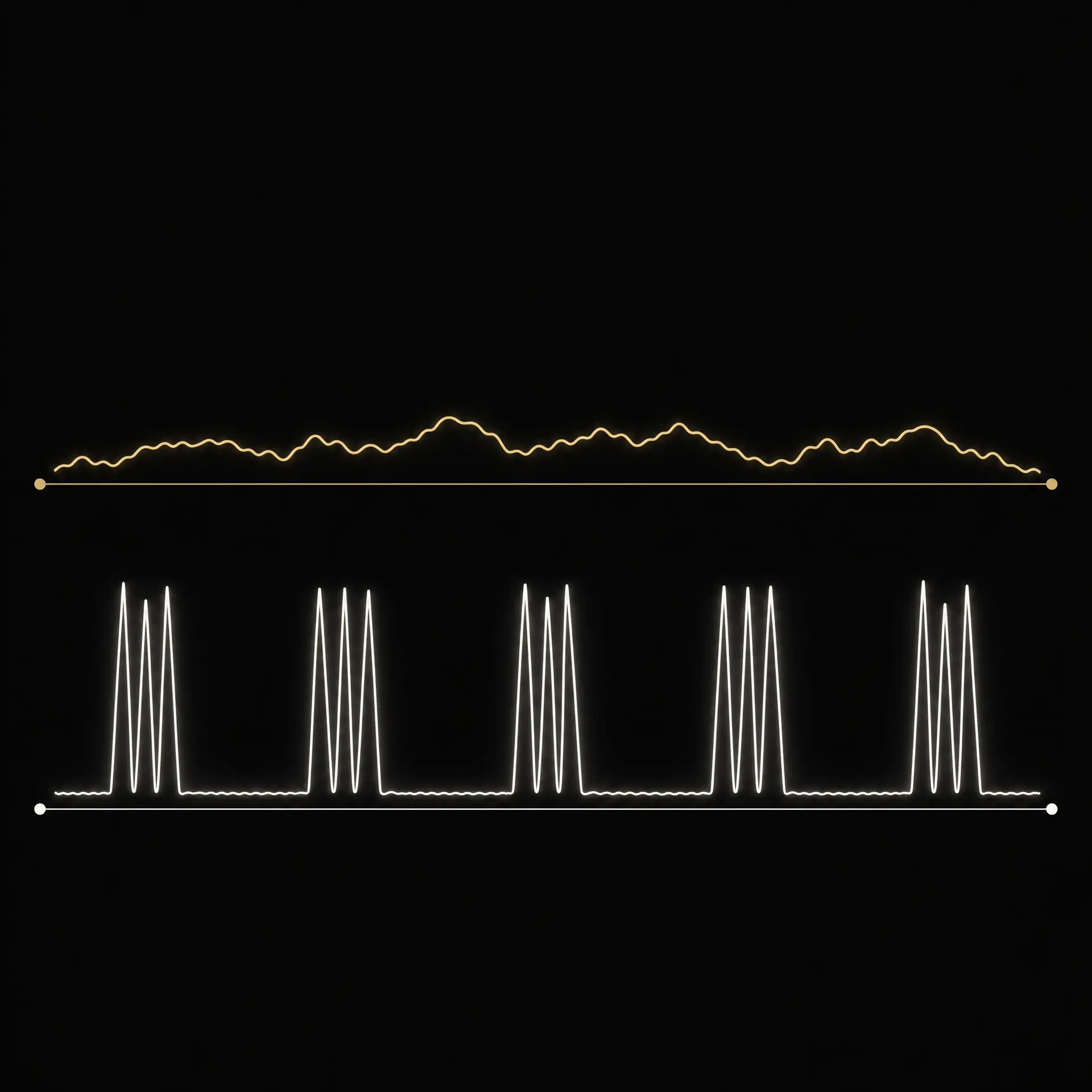
The Wilson et al. data showed that frequency and duration of cardio sessions, not the presence of cardio in a program, were the primary drivers of interference. Short, structured Zone 2 sessions at reasonable frequency do not meaningfully suppress muscle growth. Daily HIIT on top of a full lifting program does. For the average man training three to four days per week on weights, adding two to three Zone 2 sessions of 45 to 60 minutes each produces better overall health outcomes with minimal strength cost.
The combined training approach, per the broader exercise literature, produces better outcomes for metabolic health, cardiovascular fitness, and all-cause mortality than either modality alone. This connects to everything in our full guide on the benefits of strength training for men: the goal is not to choose cardio or lifting. It is to program both intelligently so they compound rather than compete.
The Practical Protocol: A Week of Cardio for Men Who Also Lift
The following protocol applies to men training three to four days per week on weights, aiming to build a complete cardiovascular base without compromising strength or hypertrophy. It is built on the San Millán and Attia framework, adjusted for a realistic weekly schedule.
Beginner Protocol (Under 6 Months of Consistent Training)
Two Zone 2 sessions per week, 30 to 45 minutes each, on a bike or rower. Total Zone 2 volume: 60 to 90 minutes. No dedicated VO2 max session yet, as the base is not ready. The goal is getting consistent at Zone 2 intensity before adding high-intensity work. Keep the two cardio sessions on separate days from lower body lifting, or at minimum six hours apart.
Intermediate Protocol (6 to 18 Months of Consistent Training)
Three Zone 2 sessions per week, 45 to 60 minutes each, on a bike or rower. Total Zone 2 volume: 135 to 180 minutes. One VO2 max session per week: four to six sets of the 4×4 protocol (four minutes at high effort, four minutes recovery), or Huberman’s sprint protocol (eight to ten sprints of 20 to 30 seconds with 90 seconds rest). That brings total weekly cardio to roughly 165 to 210 minutes. This is where the mortality curve starts moving in your favor, based on the Mandsager et al. data.
Optimized Protocol (18+ Months, Full Aerobic Base)
Four Zone 2 sessions per week, 45 to 75 minutes each, on a bike or rower. Total Zone 2 volume: 180 to 300 minutes. One VO2 max session per week. This matches the San Millán and Attia full protocol: 80% of cardio volume at Zone 2, 20% at VO2 max intensity. Total weekly cardio time: roughly 210 to 330 minutes. At this volume, you are above the WHO minimum and well into the territory where cardiorespiratory fitness produces the longevity outcomes the research documents.
Recovery between cardio sessions matters as much as the sessions themselves. Anti-inflammatory nutrition, specifically adequate protein and Omega-3 fatty acids from marine sources, supports the mitochondrial adaptations Zone 2 triggers and manages the inflammatory load from concurrent strength training. Getting 2 to 3 servings of fatty fish per week covers the dietary floor.
Nordic Naturals Ultimate Omega: View on Amazon. Third-party tested and molecularly distilled, with EPA and DHA in the triglyceride form the body absorbs most efficiently.
The 5 Cardio Mistakes Men Make
Mistake 1: All HIIT, No Zone 2 Base
High-intensity work is appealing because it is time-efficient and produces immediate fatigue, which feels like productivity. Without an aerobic base, however, HIIT raises your heart rate ceiling briefly and then stagnates. Without that mitochondrial density, fat oxidation capacity, and lactate clearance infrastructure, men who do only HIIT are pushing against a ceiling they never built the foundation to reach past.
Mistake 2: Treating 150 Minutes per Week as the Goal
If your only cardio goal is hitting 150 minutes per week of walking or light activity, you are meeting a public health minimum designed for the general sedentary population. That minimum is meaningful: it gets you off the most dangerous segment of the mortality curve. It does not, however, get you into the “above average” cardiorespiratory fitness category where the Mandsager data shows substantial longevity protection.
The target is not 150 minutes. The target is above-average VO2 max for your age group, which typically requires 3 to 4 hours of structured Zone 2 weekly plus VO2 max intervals. That distinction matters more than most men realize.
Mistake 3: Running Instead of Cycling When You Also Lift
Running is the most natural cardio mode for most men, and it is not categorically wrong. Per the Wilson et al. 2011 concurrent training meta-analysis, though, running produces significantly greater interference with hypertrophy and strength than cycling or rowing because of overlapping eccentric muscle stress. For men whose primary goal involves maintaining or building strength, cycling or rowing for Zone 2 work is the smarter choice.
Save running for when you are not in a dedicated hypertrophy phase, or keep it to one session per week. The modality question matters more than most cardio advice acknowledges.
Mistake 4: Not Knowing Your Zone 2 Heart Rate
Most men doing “Zone 2” are actually training in Zone 3. Zone 3, the moderate middle, feels sustainable and productive, but it does not produce Zone 2’s mitochondrial or fat oxidation adaptations with the same efficiency. It also does not reach the intensity required for meaningful VO2 max stimulus. Zone 3 occupies the space between both useful zones and accumulates fatigue without delivering either adaptation cleanly.
Use the talk test or the MAF method. If you can hold a full conversation while training, you are probably in Zone 2. If you cannot say more than a few words at a time, you have crossed into Zone 3 or 4. Precision here is the difference between productive training and junk miles.
Mistake 5: Too Much High-Intensity Cardio Without Recovery
Chronic high-intensity cardio without adequate recovery is associated with testosterone suppression through cortisol interference with androgen receptor signaling. Case studies and clinical observations in male endurance athletes have documented exercise-induced hypogonadism at high training volumes without adequate periodization — though prevalence estimates vary widely and the condition is most commonly seen in competitive athletes, not recreational men training 3–5 hours per week. The key distinction is not HIIT itself but chronically exceeding recovery capacity: daily high-intensity cardio with no Zone 2 base, no periodization, and no rest days drives the cortisol-to-testosterone ratio in the wrong direction.
This connects to the full hormonal context in how to naturally increase testosterone: structured, periodized cardio supports hormonal health; chronic overtraining undermines it. The goal is smart volume, not maximum volume.
Zone 2, HIIT, and No Cardio: What Each Delivers
Zone 2 Cardio
- Primary adaptation: Mitochondrial density, fat oxidation, cardiac stroke volume, capillary density
- Lactate clearance: High — trains the body to clear and use lactate as fuel
- VO2 max effect: Builds the base; moderate direct VO2 max stimulus
- Interference with lifting: Low, especially on bike or rower
- Testosterone impact: Neutral to positive when properly dosed
- Best modality: Cycling, rowing, elliptical, brisk incline walking
- Time investment: 3 to 4 hours per week for meaningful adaptation
- Verdict: The foundation. Build the base first, then add HIIT on top.
HIIT / VO2 Max Intervals
- Primary adaptation: VO2 max ceiling, cardiac output, lactate tolerance
- Lactate clearance: Trains tolerance, not clearance capacity
- VO2 max effect: 9.1% greater improvement than MICT (Weston et al. 2013 BJSM)
- Interference with lifting: Higher, especially when volume or frequency is excessive
- Testosterone impact: Acute increase post-session; chronic suppression risk if overdone without recovery
- Best modality: Bike sprints, 4×4 intervals, hill sprints, rower intervals
- Time investment: 1 session per week, 20 to 30 minutes, once Zone 2 base is established
- Verdict: The ceiling raiser. Effective when built on a Zone 2 foundation. Counterproductive without one.
No Structured Cardio
- Primary adaptation: None cardiovascular-specific
- Lactate clearance: Undeveloped — accumulates quickly under any exertion
- VO2 max effect: Declining with age without stimulus
- Interference with lifting: Zero interference — also zero cardiovascular benefit
- Testosterone impact: No cardio-specific testosterone benefit; long-term metabolic health declines
- Mortality risk: Low-fit category in the Mandsager et al. data — greater mortality risk than smoking in the same study population
- Verdict: The most common position for men who only lift. The research is clear on the cost of this choice over decades.

FAQ: How Much Cardio Do You Need
What is the minimum amount of cardio per week for health?
The WHO 2020 guidelines set the minimum at 150 to 300 minutes of moderate-intensity aerobic activity per week for all adults. Below this threshold, all-cause mortality risk increases materially. For men aiming at health optimization rather than just risk avoidance, the evidence supports 3 to 4 hours of Zone 2 cardio per week, which is roughly double the WHO minimum and aligns with the Mandsager et al. mortality data showing substantial longevity benefit above average cardiorespiratory fitness.
Can I replace Zone 2 cardio with HIIT?
No. HIIT and Zone 2 cardio produce different physiological adaptations. HIIT raises your VO2 max ceiling more efficiently. Zone 2 builds the mitochondrial density and fat oxidation capacity that the ceiling rests on. Doing only HIIT without Zone 2 means pushing against a ceiling with no foundation, and the mitochondrial adaptations that define long-term cardiovascular health require the sustained low-intensity stimulus that Zone 2 provides. The research-backed model is both: 80% Zone 2, 20% high intensity.
How do I find my Zone 2 heart rate without lab testing?
Two field methods work for most men. The talk test: you should be able to hold a full sentence of conversation without gasping, but you could not sing comfortably. The MAF Method: 180 minus your age gives your Zone 2 ceiling heart rate. A 28-year-old would target a ceiling of 152 BPM. Well-trained individuals may find their actual Zone 2 lactate threshold at a somewhat lower percentage of max heart rate, so calibrate these numbers against how the effort feels and adjust accordingly.
Does cardio lower testosterone in men?
Structured, periodized cardio does not lower testosterone in healthy men. Chronic overtraining, specifically excessive high-intensity training without adequate recovery, has been associated with testosterone suppression through cortisol interference with androgen receptor signaling. Research has documented meaningful rates of exercise-induced hypogonadism in male endurance athletes training at extreme volumes without adequate periodization. The solution is not less cardio but smarter cardio: Zone 2 at reasonable volume, one VO2 max session weekly, and adequate rest. This is covered in full at how to naturally increase testosterone.
How much cardio is too much if I’m also lifting?
The Wilson et al. 2011 concurrent training meta-analysis found that frequency and duration of cardio sessions, not cardio itself, drove interference with hypertrophy and strength. For men lifting three to four days per week, three Zone 2 sessions of 45 to 60 minutes each and one VO2 max session weekly is a productive concurrent training load that produces minimal strength interference. Daily high-intensity cardio on top of a full lifting program crosses into overtraining territory for most men and begins suppressing strength gains.
What cardio modality is best for men who also lift?
Cycling and rowing cause significantly less interference with strength and hypertrophy than running, per the Wilson et al. 2011 meta-analysis. Running involves eccentric loading of the same leg muscles used in squats and deadlifts, creating overlapping fatigue and competing muscle damage signals. Cycling and rowing use more concentric-dominant movement patterns and create far less eccentric leg stress. For Zone 2 work during a strength phase, bike or rower is the more intelligent choice.
What is a good VO2 max for a man in his 30s?
ACSM normative data for men aged 30 to 39 places the population roughly as: below 38 mL/kg/min is poor; 38 to 43 is fair; 44 to 51 is average; 52 to 56 is good; above 56 is excellent. These cut-points vary by classification source. Based on the Mandsager et al. 2018 JAMA Network Open data, the longevity benefit curve bends sharply at the “above average” to “high” category. Getting from fair to good, roughly 44 to 52 mL/kg/min, represents a meaningful improvement in all-cause mortality risk for most men in this age range.
How I Know This
For three years, I trained six days a week under the guidance of one of my closest friends, a Marine veteran who had spent years studying training methodology the hard way, by having to perform when it mattered. During that period I reached 190 pounds at 6’1″ with sub-10% body fat. I was not just lifting. We ran protocols: structured intensity zones, session separation from lifting, tracking heart rate, managing recovery.
What I learned is that cardio is the piece most men sacrifice first, usually because they read something about interference effects or because they associate it with steady-state treadmill boredom. The interference effect is real, but it is manageable. Boredom is a programming problem, not a physiology problem. The VO2 max literature I encountered in building this article reframed cardio entirely: it is not about burning calories. It is about keeping the engine capable for as long as possible.
The Bottom Line
How much cardio do you need? More than most men are doing, and structured differently than most men are doing it. The WHO minimum of 150 minutes per week keeps you off the worst segment of the mortality curve. The San Millán and Attia protocol, 3 to 4 hours of Zone 2 per week plus one VO2 max session, is where the longevity data actually shows meaningful protection. That is your target.
Zone 2 is not optional and it is not for endurance athletes only. It is the metabolic foundation that determines how your cardiovascular system ages. HIIT raises the ceiling of that foundation. Both belong in your program, in the right ratio, at the right intensities. If you are also lifting, use a bike or rower for your Zone 2 work, keep cardio and lifting on separate days where possible, and stop running daily if you want to hold your strength numbers.
Start with where you are. If two Zone 2 sessions per week is where you can begin, begin there. Add the third session when consistency is established. Add the VO2 max interval session after six to eight weeks of building the base. The compound effect of structured cardio over months and years is what the Mandsager data is measuring. Build the foundation now.
If you have not read the companion article on the benefits of strength training for men, that is the next stop. Cardio builds the engine. Lifting builds the frame. The research on both, read together, gives you a complete picture of what evidence-based physical development actually looks like.
About the Author: I’m Randal, founder of Break The Ordinary, a media brand covering health, business, finance, and tech for men who want to build real independence. I spent three years training six days a week with a Marine veteran, reaching sub-10% body fat at 190 lbs and 6’1″, which gave me direct experience with everything the cardio and concurrent training research covers. I share what the science actually says, stripped of the noise that fills most fitness content. My approach is research-first, experience-grounded, and built for men who want specific answers, not motivational filler.